There are many FAQs across the internet. But what about Rarely Asked Questions? Who is going to answer them? I am.
Michelle Ann-Flemming asked: "Who would win in a fight: Batman or Monkey?"
---If the Americans were writing, Batman. If the Chinese were writing, Monkey. If, as I currently suspect, a consortium of India and Brazil usurps the world economy from underneath both of us, they’ll be lucky to show up on the undercard, let alone have a headlining fight.
Erin Cole asked: "We the people or politicians?"
---Politicians. I've been a person my whole life and would enjoy the change.
Anthony Venutolo asked: "What's more important: Divine Providence or Manifest Destiny?"
---Destiny always manifests, but when the divine provides, the author of that manifest shows up. That’s when I get out the good silverware.
Linda Wastilla asked: "I am very curious -- do you really write in your bathroom? and if so, where exactly?"
---I compose most of what you read on this site in the bathroom. These answers I’m writing at my computer because otherwise I couldn’t read what you’re saying. If you want I’ll go sit in the bathtub now, imagine a question from you and answer that instead. I’m serious. It’s my birthday. I have the time and who’s going to stop me?
Anonymous asked: "If you were in charge of an alien economy that had no knowledge of, understanding of, or expectations for Earth, what would the price be for a one pound block of Vermont cheddar?"
---If we have no knowledge, understanding or interactions with earth, then Vermont cheddar must not be on the galactic market. Therefore I assume you're asking how much the cheddar would be on earth, outside my jurisdiction. A good pound of sharp cheddar should run you twelve earth dollars.
Cassie Nichols asked: "Of the stories and worlds you've written about, is there one in particular you'd like to visit? Is there one where you'd like to live?"
---Old Teioh. The subject of at least two stories so far (arguably more – I’ll leave it up to readers to do the arguing, if they’re ever of such a desire), it’s my favorite setting. It’s empty of people, can provide food, shelter, sun and peace. I’d only be nervous that, if I showed up there, someone else was writing the story and intended it to reject me in some horrible way. But then, you said the worlds I’ve written about, so I’m saying I get to write my stay there. In that case, really, any place is equally as good as the next since I’ll edit the heck out of it until it’s air conditioned and has good barbecue.
Cassie Nichols also asked: “Who would win in a fight, Vineguard or Lo?”
---Ninx won’t let Vineguard kill anyone, and Lo is restrained by the Cacoas Bonds, and neither of them is terribly accurate at throwing pies. Also, no one knows what we’re talking about.
Rachel Welton asked: “Would you like to write one of your Norse Pantheon stories for publication in a pagan magazine?”
---I haven’t written many stories about or emerging from the Norse Pantheon. Usually it’s just Odin hanging out with his inter-faith poker group. But sure, the P.P.G. is pagan-friendly. Have one in mind?
Cathy Oliffe asked: “What’s your love life like?”
---I have had a very pleasant off-and-on relationship with an imaginary girl since eighth grade. She's leggy (odd, since I'm not a leg man), a splendid cook and has a knack for getting through my BS without even trying. I’ve tried to convince her she’s too good for me, but she doesn’t listen.
Cathy Oliffe also asked: “why is there a little handicapped symbol beside the word verification box on everyone's blog comment page?”
---Because the internet is handicap accessible. Don’t be insensitive.
Deanna Schrayer asked: "What is the color of barnacles?"
---Most barnacles I've ever seen were white with black on the interior. Those, my nautical friends said were quite nutritious if you were starving. But they can also come in mossy green, black or yellow varieties.
Danielle La Paglia asked: "Wonder Woman or Cat Woman?"
---Whoever's free, honestly.
Marisa Birns asked: "Do you make fun of us behind our backs?"
---No. I've never been behind your back.
Ian in Japan asked: “Which of these questions took the longest to answer?”
---Rachel Welton’s, because I had to go through my archives looking for stories about Norse deities. It will take substantially longer if I write a story about Odin, Raven and the rest of the poker group vacationing in Iceland.
Saturday, September 4, 2010


Friday, September 3, 2010
Bathroom Monologue: Man is the Master of His Own Home
“Man is the master of his own home,” Douglas told himself. He didn’t know where he’d heard it first, but it comforted him hearing it now. Lord knew he needed to feel comfortable.
He undid his fly. It was the only kind of rebellion he could think of, and he buttoned it back up shortly thereafter. He paced around the living room carpet like a panther. He paced in socks, then remembered how Cheryl hated bare feet on the carpet, took them off. He scrunched his toes into the fabric and grinned like a big cat who knew his prey was somewhere.
“My living room,” he told himself. “Nobody else’s.”
Nobody else’s as of Tuesday when he and Cheryl signed the papers. She got the Manhattan place and he got this. A two-bedroom with goldenrod carpets he’d never wanted and echoes of her criticisms.
“Incapable of spontaneity!” he repeated and undid his fly again. He did it back up before anyone might see him through the window. He tugged on his jeans. They sunk half an inch, then snagged on several years of fast food.
“Surprising you with Arby’s that one time was spontaneous.”
He strolled to her faux-Persian drapes. No one was outside. No one would be up here for weeks, barring the occasional caretaker. This was a summer community.
Douglas remained at the window, watching nobody go by. No caretaker. No ex-wives with hideous red dyejobs. When he released the drapes, his hand wandered back to his crotch.
“Incapable,” he snarled. He undid his fly, moved to re-do it, and stripped off his damned pants before civility could succeed. Let a caretaker see it.
“Incapable.”
He threw the legs of his jeans around his neck like a scarf. He stormed into the kitchen that way, grabbing the phone book and opening the refrigerator door.
“Is it spontaneous to order take-out while looking in your own pantry?” he asked the lettuce. He dialed. As it rang he wandered over to the biggest carpet – the one Cheryl would likely send for in a week, when she realized it wasn’t explicitly in the papers. He sat on it, boxers and toes defiling her awful taste. He wondered if the delivery guy would take a photo of him posed like this so he could send it to his ex.
“No. I thought about it in advance – not spontaneous. I’ll have to come up with something else before he gets here.”
A vaguely Asian voice on the line asked, “Excuse me?”
“Oh, hi. What kind of food do you folks sell?”
“Only Thai, buddy.”
“Oh, that’s great. I hate Thai food. What’s expensive?”
That was spontaneous! And his joint account with Cheryl wasn’t closed yet. As the order-taker listed dishes, he flipped the pages over to Interior Decorators. He circled a number and farted into the carpet.
He undid his fly. It was the only kind of rebellion he could think of, and he buttoned it back up shortly thereafter. He paced around the living room carpet like a panther. He paced in socks, then remembered how Cheryl hated bare feet on the carpet, took them off. He scrunched his toes into the fabric and grinned like a big cat who knew his prey was somewhere.
“My living room,” he told himself. “Nobody else’s.”
Nobody else’s as of Tuesday when he and Cheryl signed the papers. She got the Manhattan place and he got this. A two-bedroom with goldenrod carpets he’d never wanted and echoes of her criticisms.
“Incapable of spontaneity!” he repeated and undid his fly again. He did it back up before anyone might see him through the window. He tugged on his jeans. They sunk half an inch, then snagged on several years of fast food.
“Surprising you with Arby’s that one time was spontaneous.”
He strolled to her faux-Persian drapes. No one was outside. No one would be up here for weeks, barring the occasional caretaker. This was a summer community.
Douglas remained at the window, watching nobody go by. No caretaker. No ex-wives with hideous red dyejobs. When he released the drapes, his hand wandered back to his crotch.
“Incapable,” he snarled. He undid his fly, moved to re-do it, and stripped off his damned pants before civility could succeed. Let a caretaker see it.
“Incapable.”
He threw the legs of his jeans around his neck like a scarf. He stormed into the kitchen that way, grabbing the phone book and opening the refrigerator door.
“Is it spontaneous to order take-out while looking in your own pantry?” he asked the lettuce. He dialed. As it rang he wandered over to the biggest carpet – the one Cheryl would likely send for in a week, when she realized it wasn’t explicitly in the papers. He sat on it, boxers and toes defiling her awful taste. He wondered if the delivery guy would take a photo of him posed like this so he could send it to his ex.
“No. I thought about it in advance – not spontaneous. I’ll have to come up with something else before he gets here.”
A vaguely Asian voice on the line asked, “Excuse me?”
“Oh, hi. What kind of food do you folks sell?”
“Only Thai, buddy.”
“Oh, that’s great. I hate Thai food. What’s expensive?”
That was spontaneous! And his joint account with Cheryl wasn’t closed yet. As the order-taker listed dishes, he flipped the pages over to Interior Decorators. He circled a number and farted into the carpet.
Thursday, September 2, 2010
Bathroom Monologue: Liner Notes for "Non-Starter"
This album is the greatest project of my entire career. In twenty-two years I’d never harmonized so many tracks and themes. It was supposed to come out in 2002, but I got a little carried away researching in India and Pakistan. I wound up composing more material for this than any other project in my life. The big stumbling point was figuring out which track should open the album. The first one I wrote is more middle-material, and there are eleven tracks that really could start the thing off. Finally this summer I decided – screw it, the album will have no beginning. The songs are so intertwined that the only justice is giving no way to start it. That may be too existential for some listeners, but I think a 31-track album that you can’t begin listening to is just what the industry needs. Fuck Hollywood and it’s anti-endings; this is the anti-beginning. Hit play and enjoy it anywhere – the car, subway, airport, club or church. I guarantee it’ll be the same unexperience everywhere.
Wednesday, September 1, 2010
Bathroom Monologue: What You Want
"They're ugly,” I smirk as our car passes the girls. “They're all lesbians."
My aunt gawks at me in her flannel. I’ve never teased her about this subject before.
"Hey. There are beautiful lesbians."
"Ah, they're all hags."
If she wasn’t a pacifist, she would have slugged me.
"Sorry," I said without a trace of sorrow. "But you know what they say: you don't want what you can't have."
"God, and you’re in college. It's 'you want what you can't have.'"
"Why would you want what you can't have? That'd be moronic. You want what you can have. That way you get it and you're happy."
She turned us off the campus road, towards where there are clean restaurants and other places you’d visit with an aunt. "Not being able to have it is what makes it attractive."
"So if I go jogging for an hour,” I say, pointing to the side of the road, “I'll only want a bottle of water if I can't have one? It's a dollar at the college store. I’ve got a dollar."
“But the things you really want are what you can’t have.”
“I’m going to college. This is, what? Thirty thousand a year? If there was something else I really wanted, I could probably swing the loans.”
“You’ll get it when you’re older.”
“And when I do? I’ll have wanted it.”
An hour later, I paid for lunch. Eleven years later I finished paying off my loans. In retrospect, I probably shouldn’t have mouthed off to my only rich relative like that.
My aunt gawks at me in her flannel. I’ve never teased her about this subject before.
"Hey. There are beautiful lesbians."
"Ah, they're all hags."
If she wasn’t a pacifist, she would have slugged me.
"Sorry," I said without a trace of sorrow. "But you know what they say: you don't want what you can't have."
"God, and you’re in college. It's 'you want what you can't have.'"
"Why would you want what you can't have? That'd be moronic. You want what you can have. That way you get it and you're happy."
She turned us off the campus road, towards where there are clean restaurants and other places you’d visit with an aunt. "Not being able to have it is what makes it attractive."
"So if I go jogging for an hour,” I say, pointing to the side of the road, “I'll only want a bottle of water if I can't have one? It's a dollar at the college store. I’ve got a dollar."
“But the things you really want are what you can’t have.”
“I’m going to college. This is, what? Thirty thousand a year? If there was something else I really wanted, I could probably swing the loans.”
“You’ll get it when you’re older.”
“And when I do? I’ll have wanted it.”
An hour later, I paid for lunch. Eleven years later I finished paying off my loans. In retrospect, I probably shouldn’t have mouthed off to my only rich relative like that.
Tuesday, August 31, 2010
Seven Somethings, Thanks Anthony
Anthony Venutolo recently handed me this little award.

The rules of the game are to provide seven outrageous facts about yourself. Six are to be lies and one is to be true, or alternatively six are true and one is a lie. I leave it up to you, constant readers, to guess whether most of these are truth or fiction, and guess which is the one that's not like the others. Is only one true, or false?
1. At age nine I turned down the opportunity to co-author a book about dinosaurs with a published author because I was, in my words, “busy working on other projects.”
2. I once took Dante’s Inferno out into the middle of a soccer field during a thunderstorm to see how it would read there.
3. I took a Jane Austen intensive at college because I thought it would be nice to get some of my reading done in the bathtub. Confessing this was probably the first, but far from the last reason that professor hated me.
4. Assigned to recite ten lines of Chaucer and completely unable to cognize Middle English pronunciation, I re-wrote a passage from The Miller’s Tale phonetically and practiced it over fifty times. I wound up doing the entire page, my accent swinging from New Jersey to Latin. I received an ovation.
5. Richard Dawkins’s The Selfish Gene convinced me that there was a God (at least one).
6. I read Fyodor Dostoyevsky’s Notes From the Underground while bedridden and alone on Easter weekend. I was alternately unimpressed and bemused, and have since felt its influence on literature is because too many healthy people read.
7. The last movie I cried at was Rambo: First Blood Part 2.
Any guesses? Leave them in the Comments section.
Any questions? Why not send them to my RAQ?
Now this award is also supposed to be forwarded on. I'll take a cue from Anthony and distribute it to just three twisted folk.
1. T.S. Bazelli springs to mind. She's been charting what constitutes weird fiction in her blog glossary, from Cyberpunk to Dark Fantasy to Urban Fiction. She's just started a Genre serial, so you can get on at the ground floor.
2. G.P. Ching won this award largely because her name is the most fun to say of any in the modern world. G.P. Ching. G.P. Ching. Say it fast enough and it sounds like you turned "Jeep" into a verb. She also won it because she's got a delightful take on the weird, like god parties and meeting your alien soul mate in the produce aisle.
3. Last is one of my favorite recent discoveries in #fridayflash. Rachel Blackbirdsong meditates on the macabre in ways that don't tick me off. That's hard these days.

The rules of the game are to provide seven outrageous facts about yourself. Six are to be lies and one is to be true, or alternatively six are true and one is a lie. I leave it up to you, constant readers, to guess whether most of these are truth or fiction, and guess which is the one that's not like the others. Is only one true, or false?
1. At age nine I turned down the opportunity to co-author a book about dinosaurs with a published author because I was, in my words, “busy working on other projects.”
2. I once took Dante’s Inferno out into the middle of a soccer field during a thunderstorm to see how it would read there.
3. I took a Jane Austen intensive at college because I thought it would be nice to get some of my reading done in the bathtub. Confessing this was probably the first, but far from the last reason that professor hated me.
4. Assigned to recite ten lines of Chaucer and completely unable to cognize Middle English pronunciation, I re-wrote a passage from The Miller’s Tale phonetically and practiced it over fifty times. I wound up doing the entire page, my accent swinging from New Jersey to Latin. I received an ovation.
5. Richard Dawkins’s The Selfish Gene convinced me that there was a God (at least one).
6. I read Fyodor Dostoyevsky’s Notes From the Underground while bedridden and alone on Easter weekend. I was alternately unimpressed and bemused, and have since felt its influence on literature is because too many healthy people read.
7. The last movie I cried at was Rambo: First Blood Part 2.
Any guesses? Leave them in the Comments section.
Any questions? Why not send them to my RAQ?
Now this award is also supposed to be forwarded on. I'll take a cue from Anthony and distribute it to just three twisted folk.
1. T.S. Bazelli springs to mind. She's been charting what constitutes weird fiction in her blog glossary, from Cyberpunk to Dark Fantasy to Urban Fiction. She's just started a Genre serial, so you can get on at the ground floor.
2. G.P. Ching won this award largely because her name is the most fun to say of any in the modern world. G.P. Ching. G.P. Ching. Say it fast enough and it sounds like you turned "Jeep" into a verb. She also won it because she's got a delightful take on the weird, like god parties and meeting your alien soul mate in the produce aisle.
3. Last is one of my favorite recent discoveries in #fridayflash. Rachel Blackbirdsong meditates on the macabre in ways that don't tick me off. That's hard these days.
Monday, August 30, 2010
Bathroom Monologue: The Invincible and The Endless
Who is more frightening: the juggernaut or the endless?
The invincible man you cannot knock down. Throw yourself at him two or three times and he does not budge. Shoot him. Throw acid. Bombs. Surely you find his force intimidating.
But the endless man you can thrash. Strike him in the chin and watch him crumple. Throw him across the room. Hang him and snap his neck: he wriggles, drops, stops, then wriggles again. He is the more frightening sight, for in the invincible man is something you can only lose against. You will resign yourself to it. But against the endless you will hope, in overpowering him time and time again, that some hour he will stay still. The truth? Some hour you will tire and be unable to harm him further, and at that hour he will sit up again. He is so much more fearsome than his betters.
The invincible man you cannot knock down. Throw yourself at him two or three times and he does not budge. Shoot him. Throw acid. Bombs. Surely you find his force intimidating.
But the endless man you can thrash. Strike him in the chin and watch him crumple. Throw him across the room. Hang him and snap his neck: he wriggles, drops, stops, then wriggles again. He is the more frightening sight, for in the invincible man is something you can only lose against. You will resign yourself to it. But against the endless you will hope, in overpowering him time and time again, that some hour he will stay still. The truth? Some hour you will tire and be unable to harm him further, and at that hour he will sit up again. He is so much more fearsome than his betters.
Sunday, August 29, 2010
Bathroom Monologue: True Stories of John 1, A Dream
Want to hear John read this story? Click the triangle to stream it, or click this text to download the MP3.
It was the morning of August 20, not that I knew it. I was asleep, sitting in a giant open-air cafeteria. God sat at the first table. Several thousand people with very respectable questions sat at the others, having turned the dining tables into a queue to go ask your query.
I think I sat at a table with a featherless velociraptor and his wife, a bottle of ginger ale. She was in a green wine bottle, but he insisted she was ginger ale. I can’t say for certain that I sat with them because I was invisible and the dream was in third person. I may not even have been in it, and only imagined an invisible me there.
The dinosaur and bottle ducked into a bathroom after a few days. It was several years before the queue moved up and I got to sit at God’s table. He was drinking chicken noodle soup from a tea cup. He looked like a man, though I couldn’t figure out just which man because He sat tilted fifteen degrees to the right. Even turning that way made it no more possible to recognize him. In retrospect, I think it was James Woods.
He was a unique conversationalist, lips moving soundlessly. Instead of a voice, words stream over His head like the news ticker in Time Square. Nerves got me. We spent an eon and a half in small talk, on the weather and Crusades. Something about His smile suggested that He liked hearing Himself talk, and more, liked talking about the wrong thing when He knew I didn’t have the guts to ask my query.
Clouds broke overhead and the cafeteria lightened. I did nothing, said nothing that I noticed saying, but God replied, “Alright, you want the meaning of life explained? I’ll tell you.”
He paused for a moment. I didn’t know what we were waiting for.
In my bedroom, the phone rang. It’s a terribly loud ring and any time it wakes me up I get quite a fright. I shot half upright and looked at it.
No, I decided, that probably wasn’t God. So I closed my eyes and lay back down. It rang three times like it always does before the answering machine picks up. It did, and a disconnect signal blared out of the speaker. I had to pick up the phone to quell it.
I could not get back to sleep after that.
It was the morning of August 20, not that I knew it. I was asleep, sitting in a giant open-air cafeteria. God sat at the first table. Several thousand people with very respectable questions sat at the others, having turned the dining tables into a queue to go ask your query.
I think I sat at a table with a featherless velociraptor and his wife, a bottle of ginger ale. She was in a green wine bottle, but he insisted she was ginger ale. I can’t say for certain that I sat with them because I was invisible and the dream was in third person. I may not even have been in it, and only imagined an invisible me there.
The dinosaur and bottle ducked into a bathroom after a few days. It was several years before the queue moved up and I got to sit at God’s table. He was drinking chicken noodle soup from a tea cup. He looked like a man, though I couldn’t figure out just which man because He sat tilted fifteen degrees to the right. Even turning that way made it no more possible to recognize him. In retrospect, I think it was James Woods.
He was a unique conversationalist, lips moving soundlessly. Instead of a voice, words stream over His head like the news ticker in Time Square. Nerves got me. We spent an eon and a half in small talk, on the weather and Crusades. Something about His smile suggested that He liked hearing Himself talk, and more, liked talking about the wrong thing when He knew I didn’t have the guts to ask my query.
Clouds broke overhead and the cafeteria lightened. I did nothing, said nothing that I noticed saying, but God replied, “Alright, you want the meaning of life explained? I’ll tell you.”
He paused for a moment. I didn’t know what we were waiting for.
In my bedroom, the phone rang. It’s a terribly loud ring and any time it wakes me up I get quite a fright. I shot half upright and looked at it.
No, I decided, that probably wasn’t God. So I closed my eyes and lay back down. It rang three times like it always does before the answering machine picks up. It did, and a disconnect signal blared out of the speaker. I had to pick up the phone to quell it.
I could not get back to sleep after that.
Saturday, August 28, 2010
Bathroom Monologue: One Million Words
"They say you have to write a million words to get really good at writing. I don’t know who “they” are – I’ve tried to avoid learning it, because learning the “they” behind any such claim tends to deflate it. Now I’ve focused and picked my word. It’s the master word: “word.” All the other ones tumble out of it, you see. So I’ll write it a million times, but not all at once. My hand would cramp. Instead I write it a hundred times a day. That’s 3,000 words a month, and 36,500 a year. In a couple months I’ll pick up the pace, when a measly hundred words gets dull. The target is a thousand a day – that’s 365,000 a year, which means in just three years I’ll be passed a million and hanging with Gore Vidal or some shit. I’m on a good roll so far. Get distracted now and then, wanting to write another word. Maybe a shorter word. Sometimes I want to write full sentences or ideas. I have a separate notebook for that – the garbage stuff, not the million-word craft. After I’m famous I’ll revisit these vanity notebooks with their dialogues and stories and see if they were worth anything. I imagine, one million words along, they’ll all look like kiddy crap. Nothing you’d learn from."
Friday, August 27, 2010
RAQ Questions for 2010
It's that time of year when I have the excuse to ask,
"Have you seen my rack?"
It's actually "RAQ." I pronounce it that way because people make amusing faces.
Rarely Asked Questions is my birthday tradition at The Bathroom Monologues. Until Friday night, September 3rd, I'm requesting all readers leave questions they don't normally ask anyone. They can be questions about me, my writing, or anything entirely unrelated.
-What's the boiling point of Tungsten?
-What does my mother's snore remind you of?
-If he wants to avoid the conductor and skip the fare, what is the best time for a Mummy to hop the Baltimore light rail?
Your questions are entirely up to you. I'll compile them and answer at least one question per person on September 4th - my birthday. That's how I celebrate. With my big RAQ.
Please leave your mysteries and queries in the Comments section of this post.
"Have you seen my rack?"
It's actually "RAQ." I pronounce it that way because people make amusing faces.
Rarely Asked Questions is my birthday tradition at The Bathroom Monologues. Until Friday night, September 3rd, I'm requesting all readers leave questions they don't normally ask anyone. They can be questions about me, my writing, or anything entirely unrelated.
-What's the boiling point of Tungsten?
-What does my mother's snore remind you of?
-If he wants to avoid the conductor and skip the fare, what is the best time for a Mummy to hop the Baltimore light rail?
Your questions are entirely up to you. I'll compile them and answer at least one question per person on September 4th - my birthday. That's how I celebrate. With my big RAQ.
Please leave your mysteries and queries in the Comments section of this post.
Thursday, August 26, 2010
Bathroom Monologue: $600,000,000 Man
The scream made him drop his magazine. It was from the suite. Lo leapt over the table and hurtled down the hall. He was about to barge shoulder first into the door when it opened inward.
Out stepped Yul. The goblin carried what looked like laundry bundled in his arms.
"Hey Lo," Yul greeted. "Remember how you said the guy is worth six hundred mil?"
Lo tried to get around him. For a little guy, Yul was brilliant at getting in the way.
“Yeah? What’s going on in there? Is he safe?”
Yul lifted his bundle. A limp hand fell out of one sleeve.
Lo looked down at it, eyes going wider, then narrower in realization.
"Well this is at least 15% of his body mass. Nuts to bodyguarding, we're set for life."
"Yul! Human arms don't grow back!"
"What?"
"They don't grow back, you moron goblin." He pulled up his sleeve to show leaf patterns of scars. "Fell on glass when I was a kid. Still have nerve damage."
"What kind of budget immune system do you people have?" Yul shook his prize arm at Lo, extending their client’s index finger and wagging it shamelessly. "Well I'm not giving it back. He's rich. Let him buy another arm. I'll call you after I pawn it."
Before Lo could tackle him, the goblin ducked and charged between his legs and fled for the stairs. Lo sighed slowly and tried to calculate an apology that would save his job. Hopefully the blood loss would leave his employer more amenable.
Out stepped Yul. The goblin carried what looked like laundry bundled in his arms.
"Hey Lo," Yul greeted. "Remember how you said the guy is worth six hundred mil?"
Lo tried to get around him. For a little guy, Yul was brilliant at getting in the way.
“Yeah? What’s going on in there? Is he safe?”
Yul lifted his bundle. A limp hand fell out of one sleeve.
Lo looked down at it, eyes going wider, then narrower in realization.
"Well this is at least 15% of his body mass. Nuts to bodyguarding, we're set for life."
"Yul! Human arms don't grow back!"
"What?"
"They don't grow back, you moron goblin." He pulled up his sleeve to show leaf patterns of scars. "Fell on glass when I was a kid. Still have nerve damage."
"What kind of budget immune system do you people have?" Yul shook his prize arm at Lo, extending their client’s index finger and wagging it shamelessly. "Well I'm not giving it back. He's rich. Let him buy another arm. I'll call you after I pawn it."
Before Lo could tackle him, the goblin ducked and charged between his legs and fled for the stairs. Lo sighed slowly and tried to calculate an apology that would save his job. Hopefully the blood loss would leave his employer more amenable.
Wednesday, August 25, 2010
Bathroom Monologue: A Little Bit of Alright
There is an audio version of this monologue. Click the triangle on the left to listen, or this text to download the MP3.
It's often quoted and seldom understood, but to be called "a little bit of Allright" is high praise. Allright is not sold outside of certain alleys in Europe, and thus the expression's global unpopularity is understandable. Nonetheless, a little bit of Allright is a fine thing to be called and a finer thing to be given. It will thicken stew, mend your bones and make you appreciate that kid of yours who shows no tangible potential.
Allright is highly valuable and often ripped off, but generic brands are to be avoided. AllLeft is next to useless, as even the maddest liberal has some policy or aspect of humanity he would conserve (perhaps at the expense of all the others). AllRight, with the capital ‘R,’ is no better. It’s distilled from a conservativism so thick that its points of origin are waiting for miracles, not causing them.
If you’re confused, check the label. The Ingredients should read: “Ingredients: Inexplicable.” Then below, in yellow text, it ought to read, “EXTRACTED FROM CENTER OF THE EARTH.” Knock-offs will claim to come from a trendy beach somewhere. True Allright can only be harvested at the earth’s molten core, where all unfulfilled hopes have descended, dropped from well-meaning hands. They are thought a foul thing, unfulfilled, empty, the disappointments of their owners. It seldom comes to mind when you’re purchasing a tin of Allright, but you’re likely buying back some of your own shortcomings. It’s something to muse on while you spread it on your toast or toss it in the air at weddings. My, how pigeons love it.
It's often quoted and seldom understood, but to be called "a little bit of Allright" is high praise. Allright is not sold outside of certain alleys in Europe, and thus the expression's global unpopularity is understandable. Nonetheless, a little bit of Allright is a fine thing to be called and a finer thing to be given. It will thicken stew, mend your bones and make you appreciate that kid of yours who shows no tangible potential.
Allright is highly valuable and often ripped off, but generic brands are to be avoided. AllLeft is next to useless, as even the maddest liberal has some policy or aspect of humanity he would conserve (perhaps at the expense of all the others). AllRight, with the capital ‘R,’ is no better. It’s distilled from a conservativism so thick that its points of origin are waiting for miracles, not causing them.
If you’re confused, check the label. The Ingredients should read: “Ingredients: Inexplicable.” Then below, in yellow text, it ought to read, “EXTRACTED FROM CENTER OF THE EARTH.” Knock-offs will claim to come from a trendy beach somewhere. True Allright can only be harvested at the earth’s molten core, where all unfulfilled hopes have descended, dropped from well-meaning hands. They are thought a foul thing, unfulfilled, empty, the disappointments of their owners. It seldom comes to mind when you’re purchasing a tin of Allright, but you’re likely buying back some of your own shortcomings. It’s something to muse on while you spread it on your toast or toss it in the air at weddings. My, how pigeons love it.
Tuesday, August 24, 2010
Killing To Kill a Mockingbird
It’s been an interesting 50th anniversary for Harper Lee’s To Kill a Mockingbird. It was to be the next in a string of arbitrary holidays, like celebrating Charles Darwin’s 200th birthday or J.D. Salinger’s death – the subject isn’t invited, but is celebrated by renewed praise and the feeling you should go read that thing they did. We were going to throw such a casual festivities for Ms. Lee’s book of childhood lessons, but an unusual thing happened: party crashers.

Last August, Malcolm Gladwell took to the pages of The New Yorker with a befuddling argument. He began with a history lesson of the real politics in the Deep South, suggesting things were more optimistic than how Lee portrayed them by describing racial progressive James Folsom. Yet paragraphs later Gladwell trumpeted lynching and the power of the KKK. He panned Lee’s “hearts and minds” approach to change. He demanded a political approach, though he failed to explain why that would be better and tenuously ignored that political changes often come through winning hearts and minds.
Gladwell closed by comparing Lee’s approach to George Orwell’s criticism of Charles Dickens: that Dickens pointed out problems without fixing them. But he had forgotten his earlier complaint. Lee gave us the solution: change as people and the systems made up of those people can work for good. Her solution was “hearts and minds.” It was an initiative still hailed today by millions of people who recall having their views changed or emboldened by the book. His criticism was typical Gladwell: a startling premise, entertaining research, and unconvincing logic.
Since then several prominent papers have published broadsides. The most interesting one came in June of this year, from Allen Barra of the Wall Street Journal. Barra was rebuffed for primarily being a sports writer. As someone who is pro-Lee and who has written about rednecks experimenting to see if shit would literally roll downhill, I hope to neutralize that sad ad hominem argument.
Instead, let us deal with Barra’s grievance. He claimed To Kill a Mockingbird was not intellectually open-ended. “In all great novels,” he wrote, “there is some quality of moral ambiguity, some potentially controversial element that keeps the book from being easily grasped or explained.” It rings somewhat true. Certainly college kids can stay up late arguing Homer’s opinions on the divine, or the thesis of Candide, or why Tom Sawyer returned at the end of The Adventures of Huckleberry Finn.
But it only rings somewhat true. Most of Jonathan Swift and Mark Twain’s social satires can be grasped in seconds; it’s not their ambiguity or complexity that impresses us. And Barra’s ideal disqualifies all the dystopian classics: George Orwell's 1984, Aldous Huxley’s Brave New World and Ray Bradbury’s Fahrenheit 451 are pretty obvious about everything they’re jabbing at. Every canto of Dante’s The Divine Comedy is easily grasped; we analyze it for autobiographical and cultural details, but such avenues are still open with Harper Lee as well.
There are ways in which the obviousness of intent can make us reject art. Repugnance of intent might stir us to hypocritical rejections; State of Fear's anti-global warming agenda turned the SciFi community against Michael Crichton. When theme overrides fiction, it can break the deal; Phillip Pullman's His Dark Materials trilogy gets too preachy even for many atheists. But To Kill a Mockingbird is about Scout growing up under a father figure she never quite clicked with, and his attempts at lessons and paternal authority are entirely germane to the plot. If the novel's anti-racism fills up Barra’s memory, he misses that while it is the theme of the final act, it is not the entire book. The book is about the life of children in a small Alabama town and Scout's relationship to her passive father.
The prodding of To Kill a Mockingbird continues. There is some iconoclasm to it; editors probably didn’t mind getting more clicks and attention. Flannery O’Connor’s insult that it was only a children’s book was quoted over and over; and a dozen called it a collection of aphorisms (Oscar Wilde and George Bernard Shaw’s best features are quotability, but okay). There were callow complaints that it was too liberal, or its perceived liberalism was too flimsy.
The novel's liberalism has taken a particularly half-hearted beating. Nobody wants to support Jim Crow. The mantra of these critics is that the novel exposes the “limits of liberalism.” No writer has yet explained this one very well. It’s a self-effacing throwaway, written by liberals who should (and probably do) know better. Liberalism, especially the touchy-feely-make-life-better variety, has no limits. It’s responsible for a chunk of the U.S.’s trillion-dollar-deficit and, if you ever think liberalism can’t fail any worse, turn on Fox Radio to hear their next nightmare scenario. To avoid wasting anymore time, here’s one more sentence about whatever "limits of liberalism" might have to do with this novel:
A nice guy (not a patented liberal idea) takes a case for a minority (more of a liberal thing) and shows his daughter an ideal of bravery (not a patented liberal thing) and staunch moralism (sort of a conservative thing), before the book ends without him running for mayor, governor, senator or president (the sorts of offices where the powers of liberalism are tested closer to levels one might consider limits), and with no legal policy changing (absence of liberalism).
There was also iconoclasm in defending To Kill a Mockingbird, and its defenders could be equally baffling. For instance, Jesse Kornbluth at The Huffington Post cried feminism. Harper Lee is a woman and so may be targeted for more mistreatment than her male peers. There is anti-femininity in some of literary academia; accusations that Truman Capote had to write this book for her certainly feel tinged with chauvinism. Yet there is something inauthentic to the anti-female defense. Fellow southern ladies Eudora Welty and Flannery O’Connor never had their classic status attacked with the vehemence Lee is seeing. Alice Munro is treated as one of the foremost living short story writers, and the offbeat critics are just as fond of Lydia Davis. Women are very accepted in best-selling mainstream fiction, with representatives like Anna Quindlen, Patricia Cornwall, Agatha Christie, J.K. Rowling and Stephanie Meyer. At its most plausible, an anti-feminine bias would leave Lee more likely to be criticized, but not to cause this criticism.
Kornbluth also asserted that Atticus Finch was “a feminized man.” His personality appeared tempered by the better angels of feminism: in touch with idealism and feelings, willing to stand up for the right thing. If it seems messed up to you that those items are thought essentially feminine instead of human, well, you’re right and I agree with you. Yet post-feminism in America, it is marginally more acceptable for men to be in touch with our feelings, and post-cynicism, we’re told to shelve our ideals for pragmatism. These conflict, and so the feminized Atticus Finch would rile even more people.
That feels incomplete. We have popular idealist characters even in today’s post-cynical media. It may be less the feminized component to his ideals, and more the geographical. To Kill a Mockingbird is small town, Middle America and Deep South all at once. Many people on the coasts bear an irrational hatred for such locales. No number of megachurches in New York City and Los Angeles dissuade them from bashing the South’s religiosity. Iowa can legalize gay marriage before New York and the stigma stays. Harper Lee can write a novel where a white guy defends a black guy, and he’s dismissed as “folksy” and “down-home.” The same month, we watched race riots in Oakland. Atticus Finch’s problem isn’t that he’s feminized. It’s his accent. He’s affirming Sarah Palin’s notion of a Southern parent who knows what’s right. Never mind that he was invented fifty years ago, his creation had nothing to do with the current culture war, and that his existence in no way suggests people from other regions can’t be deeply moral (a proposal Finch would probably find mortifying). It is not an all-conquering bias, or else millions of people on the coasts would not love the book as they do, but it is there.
Something else is there. The more you read of this debate, the more you sense the essence of most debates. A lot of people read a book that affected them deeply. Other people weren’t affected that way. Both groups clad themselves in the aesthetic of reason to defend how they felt. When it becomes difficult to substantiate their position, they attacked the other (heck, I nearly damned my home state a paragraph ago). The only people likely to change sides are those who were utterly oblivious that there were any other sides at all, and in their surprise, trip over the line. We’ll see how things shape up for the 75th anniversary, or whenever Harper Lee passes away – whichever bizarre holiday falls first.

Last August, Malcolm Gladwell took to the pages of The New Yorker with a befuddling argument. He began with a history lesson of the real politics in the Deep South, suggesting things were more optimistic than how Lee portrayed them by describing racial progressive James Folsom. Yet paragraphs later Gladwell trumpeted lynching and the power of the KKK. He panned Lee’s “hearts and minds” approach to change. He demanded a political approach, though he failed to explain why that would be better and tenuously ignored that political changes often come through winning hearts and minds.
Gladwell closed by comparing Lee’s approach to George Orwell’s criticism of Charles Dickens: that Dickens pointed out problems without fixing them. But he had forgotten his earlier complaint. Lee gave us the solution: change as people and the systems made up of those people can work for good. Her solution was “hearts and minds.” It was an initiative still hailed today by millions of people who recall having their views changed or emboldened by the book. His criticism was typical Gladwell: a startling premise, entertaining research, and unconvincing logic.
Since then several prominent papers have published broadsides. The most interesting one came in June of this year, from Allen Barra of the Wall Street Journal. Barra was rebuffed for primarily being a sports writer. As someone who is pro-Lee and who has written about rednecks experimenting to see if shit would literally roll downhill, I hope to neutralize that sad ad hominem argument.
Instead, let us deal with Barra’s grievance. He claimed To Kill a Mockingbird was not intellectually open-ended. “In all great novels,” he wrote, “there is some quality of moral ambiguity, some potentially controversial element that keeps the book from being easily grasped or explained.” It rings somewhat true. Certainly college kids can stay up late arguing Homer’s opinions on the divine, or the thesis of Candide, or why Tom Sawyer returned at the end of The Adventures of Huckleberry Finn.
But it only rings somewhat true. Most of Jonathan Swift and Mark Twain’s social satires can be grasped in seconds; it’s not their ambiguity or complexity that impresses us. And Barra’s ideal disqualifies all the dystopian classics: George Orwell's 1984, Aldous Huxley’s Brave New World and Ray Bradbury’s Fahrenheit 451 are pretty obvious about everything they’re jabbing at. Every canto of Dante’s The Divine Comedy is easily grasped; we analyze it for autobiographical and cultural details, but such avenues are still open with Harper Lee as well.
There are ways in which the obviousness of intent can make us reject art. Repugnance of intent might stir us to hypocritical rejections; State of Fear's anti-global warming agenda turned the SciFi community against Michael Crichton. When theme overrides fiction, it can break the deal; Phillip Pullman's His Dark Materials trilogy gets too preachy even for many atheists. But To Kill a Mockingbird is about Scout growing up under a father figure she never quite clicked with, and his attempts at lessons and paternal authority are entirely germane to the plot. If the novel's anti-racism fills up Barra’s memory, he misses that while it is the theme of the final act, it is not the entire book. The book is about the life of children in a small Alabama town and Scout's relationship to her passive father.
The prodding of To Kill a Mockingbird continues. There is some iconoclasm to it; editors probably didn’t mind getting more clicks and attention. Flannery O’Connor’s insult that it was only a children’s book was quoted over and over; and a dozen called it a collection of aphorisms (Oscar Wilde and George Bernard Shaw’s best features are quotability, but okay). There were callow complaints that it was too liberal, or its perceived liberalism was too flimsy.
The novel's liberalism has taken a particularly half-hearted beating. Nobody wants to support Jim Crow. The mantra of these critics is that the novel exposes the “limits of liberalism.” No writer has yet explained this one very well. It’s a self-effacing throwaway, written by liberals who should (and probably do) know better. Liberalism, especially the touchy-feely-make-life-better variety, has no limits. It’s responsible for a chunk of the U.S.’s trillion-dollar-deficit and, if you ever think liberalism can’t fail any worse, turn on Fox Radio to hear their next nightmare scenario. To avoid wasting anymore time, here’s one more sentence about whatever "limits of liberalism" might have to do with this novel:
A nice guy (not a patented liberal idea) takes a case for a minority (more of a liberal thing) and shows his daughter an ideal of bravery (not a patented liberal thing) and staunch moralism (sort of a conservative thing), before the book ends without him running for mayor, governor, senator or president (the sorts of offices where the powers of liberalism are tested closer to levels one might consider limits), and with no legal policy changing (absence of liberalism).
There was also iconoclasm in defending To Kill a Mockingbird, and its defenders could be equally baffling. For instance, Jesse Kornbluth at The Huffington Post cried feminism. Harper Lee is a woman and so may be targeted for more mistreatment than her male peers. There is anti-femininity in some of literary academia; accusations that Truman Capote had to write this book for her certainly feel tinged with chauvinism. Yet there is something inauthentic to the anti-female defense. Fellow southern ladies Eudora Welty and Flannery O’Connor never had their classic status attacked with the vehemence Lee is seeing. Alice Munro is treated as one of the foremost living short story writers, and the offbeat critics are just as fond of Lydia Davis. Women are very accepted in best-selling mainstream fiction, with representatives like Anna Quindlen, Patricia Cornwall, Agatha Christie, J.K. Rowling and Stephanie Meyer. At its most plausible, an anti-feminine bias would leave Lee more likely to be criticized, but not to cause this criticism.
Kornbluth also asserted that Atticus Finch was “a feminized man.” His personality appeared tempered by the better angels of feminism: in touch with idealism and feelings, willing to stand up for the right thing. If it seems messed up to you that those items are thought essentially feminine instead of human, well, you’re right and I agree with you. Yet post-feminism in America, it is marginally more acceptable for men to be in touch with our feelings, and post-cynicism, we’re told to shelve our ideals for pragmatism. These conflict, and so the feminized Atticus Finch would rile even more people.
That feels incomplete. We have popular idealist characters even in today’s post-cynical media. It may be less the feminized component to his ideals, and more the geographical. To Kill a Mockingbird is small town, Middle America and Deep South all at once. Many people on the coasts bear an irrational hatred for such locales. No number of megachurches in New York City and Los Angeles dissuade them from bashing the South’s religiosity. Iowa can legalize gay marriage before New York and the stigma stays. Harper Lee can write a novel where a white guy defends a black guy, and he’s dismissed as “folksy” and “down-home.” The same month, we watched race riots in Oakland. Atticus Finch’s problem isn’t that he’s feminized. It’s his accent. He’s affirming Sarah Palin’s notion of a Southern parent who knows what’s right. Never mind that he was invented fifty years ago, his creation had nothing to do with the current culture war, and that his existence in no way suggests people from other regions can’t be deeply moral (a proposal Finch would probably find mortifying). It is not an all-conquering bias, or else millions of people on the coasts would not love the book as they do, but it is there.
Something else is there. The more you read of this debate, the more you sense the essence of most debates. A lot of people read a book that affected them deeply. Other people weren’t affected that way. Both groups clad themselves in the aesthetic of reason to defend how they felt. When it becomes difficult to substantiate their position, they attacked the other (heck, I nearly damned my home state a paragraph ago). The only people likely to change sides are those who were utterly oblivious that there were any other sides at all, and in their surprise, trip over the line. We’ll see how things shape up for the 75th anniversary, or whenever Harper Lee passes away – whichever bizarre holiday falls first.
Monday, August 23, 2010
Bathroom Monologue: His People’s Story, OR, Listening to Desmond Tutu does this to me, and I’d like to apologize to him
Right? So God wakes up from this fantastic Technicolor dream full of ideas. Peace. Velocity being distance traveled divided by time. Angels and comets and waves that are simultaneously particles. Things that make no sense in the real world but are so coherent in sleep.
God really likes this dream, so He makes people and tells them what they did in the dream. He sends angels and comets across the sky and lets light illuminate them. Whole universe, constantly expanding just like in that dream.
People have all this overhead and in their heads. Peace. Velocity being distance traveled divided by time. Tolerance and witch-burning. But the people can’t even understand their own dreams, let alone those above. Soon they’re tugging on each other’s scalps and setting things on fire, always yelling, “Why God, why?”
God comes over and asks what the fuss is about. One little human goes, “Why did you make the warlord kill my brother?”
God goes, “Don’t give me nonsense. I was out giving Saturn rings.”
They say He filled the world with evil, so God takes all the humans over to a rainbow. He points at it, names all the colors and says, “See? Very nice.”
The people look at it a while, develop a theory of optics and say, “See, God? It’s just a trick of the light. It’s not really there.”
And He says, “Yes, just like in the dream.”
They don’t get it, kill each other some more and blame Him. God thinks what from the dream would fix this, and goes, “Ah-ha!” And He goes to bed.
That’s how the creation story goes with my people. I like it better than yours, but that may just be the familiarity.
God really likes this dream, so He makes people and tells them what they did in the dream. He sends angels and comets across the sky and lets light illuminate them. Whole universe, constantly expanding just like in that dream.
People have all this overhead and in their heads. Peace. Velocity being distance traveled divided by time. Tolerance and witch-burning. But the people can’t even understand their own dreams, let alone those above. Soon they’re tugging on each other’s scalps and setting things on fire, always yelling, “Why God, why?”
God comes over and asks what the fuss is about. One little human goes, “Why did you make the warlord kill my brother?”
God goes, “Don’t give me nonsense. I was out giving Saturn rings.”
They say He filled the world with evil, so God takes all the humans over to a rainbow. He points at it, names all the colors and says, “See? Very nice.”
The people look at it a while, develop a theory of optics and say, “See, God? It’s just a trick of the light. It’s not really there.”
And He says, “Yes, just like in the dream.”
They don’t get it, kill each other some more and blame Him. God thinks what from the dream would fix this, and goes, “Ah-ha!” And He goes to bed.
That’s how the creation story goes with my people. I like it better than yours, but that may just be the familiarity.
Sunday, August 22, 2010
Bathroom Monologue: Exaggeration
Nobody has headaches; they have migraines.
Nobody throws fits; they have nervous breakdowns.
Nobody has ideas; they have revelations.
Nobody’s smart; they’re geniuses.
Soldiers went from shellshock to post traumatic stress disorder
Wars became foreign conflicts
Deaths became collateral damage
Yet every new Apple product is a Gutenberg Moment.
Every long movie is an epic.
Every crime is the worst act in the history of its context.
It’s a hyperbolic curve of thought.
Nobody throws fits; they have nervous breakdowns.
Nobody has ideas; they have revelations.
Nobody’s smart; they’re geniuses.
Soldiers went from shellshock to post traumatic stress disorder
Wars became foreign conflicts
Deaths became collateral damage
Yet every new Apple product is a Gutenberg Moment.
Every long movie is an epic.
Every crime is the worst act in the history of its context.
It’s a hyperbolic curve of thought.
Saturday, August 21, 2010
Bathroom Art Challenge
A couple months ago I shared the description of a painting. I asked if this description could be a story in itself. I also asked people to draw up what they imagined, using any visual medium they pleased. Crayons, inks, computer software, posed photography - anything. Most people were intimidated. I can sympathize; I'm terrible at drawing. But three people were bold enough to give it a shot. Here is their work. If you like it, please leave a comment and check out their sites.

Artist: Sam Roman
Title: Kiss
Home: Facebook

Artist: Tony Noland
Title: From Land to Landless
Link: Landless

Artist: Red
Title: What happens when you can't render water
URL: http://redisdrunk.deviantart.com

Artist: Sam Roman
Title: Kiss
Home: Facebook

Artist: Tony Noland
Title: From Land to Landless
Link: Landless

Artist: Red
Title: What happens when you can't render water
URL: http://redisdrunk.deviantart.com
Friday, August 20, 2010
Bathroom Monologue: Kill Mommy
An audio version of this story is available. Click on the triangle on the left to begin listening, or click on this text to download the MP3.
Five minutes into the first quarter, Bob heard something behind him. He looked behind the sofa and saw his son trudging towards the stairs. He wore his cowboy hat and cap gun belt.
“What did Mom say about wearing that stuff inside, Junior?”
The boy didn’t look at him. He said, in a pathetic John Wayne impression, “I’ve come to kill Mom.”
“Well she’s not upstairs. She’s out picking up dinner. Take that off and come watch the game.”
Junior did not take off his gear, but he did come sit on the sofa. He ate a Frito and glared at the Dallas defense. He stroked his plastic gun in the holster.
After a few disappointing downs, Bob examined the boy.
“You know that thing doesn’t shoot real bullets. This plan's not liable to work out for you.”
“I couldn’t find a real one, and this is loud. Loud noises give old people heart attack sometimes.”
“She’ll love to hear that.”
Dallas fumbled for the first, but likely not last time today.
“Why are you going to kill her?”
Junior talked at the screen, like the play-by-play analysts already knew and commiserated on this.
“She told Linda Waldemaar that I like her.”
“Sharing feelings.” Bob ate a Frito. “Vile.”
“Now everyone at school knows. They made fun of me. I’ll be unpopular forever.”
“That is how it rolls. A girl found out I liked her in the second grade and no one has liked me since. I only got your mother through elaborate negotiation and bear traps.”
“When she comes home, I’m going to kill her. Then I’ll probably kill myself.”
“Well the cap gun is half-assing it. You’re getting big. You can wield a bludgeon.”
“What’s that?”
“Do you still have that baseball bat we got for your birthday? That’s one.”
Junior wandered out through the patio. He returned with no cowboy hat, the bat in both hands. He held it up for approval.
“Yeah,” assured his father. “That’s a strong bat. Louisville wood. Your mother picked it out.”
Junior grimaced. He slid his hands down to the grip and wound up, perhaps imagining his mother’s face being pitched down the plate at sixty miles an hour. It looked like he bunted.
“I’m going to use it to kill her.”
“It’ll hurt. But on second thought,” Bob deliberated, looking to the fire place, “what about those pokers? They’re metal, swing easier, and pointed at the end. You could really hurt someone with that.”
Junior looked at the rack of fireplace tools. When he didn't take one, Bob got up, selected the cast iron poker and tossed it to him. Junior barely caught it.
“Go on outside and whack a couple trees. Get the feel for it.”
Junior exited via the patio again. Bob sipped his beer as the Dallas defense continued to give up first down after first down.
At the twenty yard line, he heard a clang and a yelp from outside. He stuck his head out the glass door and saw Junior standing by a tree, clutching his fingers. The poker lay in the grass.
“That’s no good,” Bob chastised. “How can you kill a full grown woman if you can barely assault an overgrown plant? Imagine your mother lying there on the dirt, blood oozing from her cheek, the job unfinished. How disappointed she’d be in you.”
Junior pouted furiously down at the poker.
“Why did she have to tell Linda Waldeamaar?”
Bob collected the poker. He brushed the dirt off and asked, “Is this the Linda you’ve been pining over all year?”
“Sort of.”
“You keep writing her notes and not sending them? You go down to her bus stop but never say hi? Keep sitting behind her in class?”
“Sort of.”
“Junior, do you know what a stalker is?”
“No?”
“Well Linda's got the internet and she does. She and Mrs. Waldemaar started thinking you were one, and your mother talked to Mrs. Waldemaar to keep them from doing anything drastic. Linda probably found out that way, when her own mother tattled.”
Junior kept pouting at the ground where the poker had been. He reached to his holster, cap gun still hanging there in full loyalty.
“I probably shouldn’t kill her for that.”
“Use your better judgment. But before she gets home, how about you put this poker and that gun away, and go call Linda? If she already thinks you’re a weirdo then you’re free to say whatever you want. Tell her how you feel. Can’t take more guts than killing your mother.”
Junior took the poker and waddled off on his duties. Bob took another beer and resumed his life in front of the television. Dallas took the ball eighty-three yards and kicked a field goal.
Junior grabbed the cordless and started up the stairs, for the privacy of his room. He paused on the third step.
“Dad?”
“Yes?”
“I’m sorry nobody likes you.”
Bob frowned at the screen. This kickoff was important.
“I get by.”
The audio version of this monologue was made possible by two fine guys. Max Cantor created the audio player and provided the bandwidth. Andreas Sundgren helped get me a new microphone so I can start recording again. I'd like to thank both of them.
Five minutes into the first quarter, Bob heard something behind him. He looked behind the sofa and saw his son trudging towards the stairs. He wore his cowboy hat and cap gun belt.
“What did Mom say about wearing that stuff inside, Junior?”
The boy didn’t look at him. He said, in a pathetic John Wayne impression, “I’ve come to kill Mom.”
“Well she’s not upstairs. She’s out picking up dinner. Take that off and come watch the game.”
Junior did not take off his gear, but he did come sit on the sofa. He ate a Frito and glared at the Dallas defense. He stroked his plastic gun in the holster.
After a few disappointing downs, Bob examined the boy.
“You know that thing doesn’t shoot real bullets. This plan's not liable to work out for you.”
“I couldn’t find a real one, and this is loud. Loud noises give old people heart attack sometimes.”
“She’ll love to hear that.”
Dallas fumbled for the first, but likely not last time today.
“Why are you going to kill her?”
Junior talked at the screen, like the play-by-play analysts already knew and commiserated on this.
“She told Linda Waldemaar that I like her.”
“Sharing feelings.” Bob ate a Frito. “Vile.”
“Now everyone at school knows. They made fun of me. I’ll be unpopular forever.”
“That is how it rolls. A girl found out I liked her in the second grade and no one has liked me since. I only got your mother through elaborate negotiation and bear traps.”
“When she comes home, I’m going to kill her. Then I’ll probably kill myself.”
“Well the cap gun is half-assing it. You’re getting big. You can wield a bludgeon.”
“What’s that?”
“Do you still have that baseball bat we got for your birthday? That’s one.”
Junior wandered out through the patio. He returned with no cowboy hat, the bat in both hands. He held it up for approval.
“Yeah,” assured his father. “That’s a strong bat. Louisville wood. Your mother picked it out.”
Junior grimaced. He slid his hands down to the grip and wound up, perhaps imagining his mother’s face being pitched down the plate at sixty miles an hour. It looked like he bunted.
“I’m going to use it to kill her.”
“It’ll hurt. But on second thought,” Bob deliberated, looking to the fire place, “what about those pokers? They’re metal, swing easier, and pointed at the end. You could really hurt someone with that.”
Junior looked at the rack of fireplace tools. When he didn't take one, Bob got up, selected the cast iron poker and tossed it to him. Junior barely caught it.
“Go on outside and whack a couple trees. Get the feel for it.”
Junior exited via the patio again. Bob sipped his beer as the Dallas defense continued to give up first down after first down.
At the twenty yard line, he heard a clang and a yelp from outside. He stuck his head out the glass door and saw Junior standing by a tree, clutching his fingers. The poker lay in the grass.
“That’s no good,” Bob chastised. “How can you kill a full grown woman if you can barely assault an overgrown plant? Imagine your mother lying there on the dirt, blood oozing from her cheek, the job unfinished. How disappointed she’d be in you.”
Junior pouted furiously down at the poker.
“Why did she have to tell Linda Waldeamaar?”
Bob collected the poker. He brushed the dirt off and asked, “Is this the Linda you’ve been pining over all year?”
“Sort of.”
“You keep writing her notes and not sending them? You go down to her bus stop but never say hi? Keep sitting behind her in class?”
“Sort of.”
“Junior, do you know what a stalker is?”
“No?”
“Well Linda's got the internet and she does. She and Mrs. Waldemaar started thinking you were one, and your mother talked to Mrs. Waldemaar to keep them from doing anything drastic. Linda probably found out that way, when her own mother tattled.”
Junior kept pouting at the ground where the poker had been. He reached to his holster, cap gun still hanging there in full loyalty.
“I probably shouldn’t kill her for that.”
“Use your better judgment. But before she gets home, how about you put this poker and that gun away, and go call Linda? If she already thinks you’re a weirdo then you’re free to say whatever you want. Tell her how you feel. Can’t take more guts than killing your mother.”
Junior took the poker and waddled off on his duties. Bob took another beer and resumed his life in front of the television. Dallas took the ball eighty-three yards and kicked a field goal.
Junior grabbed the cordless and started up the stairs, for the privacy of his room. He paused on the third step.
“Dad?”
“Yes?”
“I’m sorry nobody likes you.”
Bob frowned at the screen. This kickoff was important.
“I get by.”
The audio version of this monologue was made possible by two fine guys. Max Cantor created the audio player and provided the bandwidth. Andreas Sundgren helped get me a new microphone so I can start recording again. I'd like to thank both of them.
Thursday, August 19, 2010
Bathroom Monologue: The Fate of Arthur
When Le Fay saw Arthur stir, she grabbed his magic scabbard and fled from the tents. One nurse pursued her, but the other two remained with the wounded king. Without their help, he was sure to--
Ahem. Arthur summoned Gawain. He clasped his hand firmly and said, "You are the last loyal man in my house. If this wound takes my life, let me slip into tranquil lake. One day, in England's greatest hour of need--"
Ahem. So Gawain made Le Fay give him back his scabbard. Arthur hugged her and they took a carriage ride over to Guinevere’s, where they picked her and Lancelot up. The five of them went down to the country, far away from battle, and found a really nice farm with rolling hills and lush fields. Arthur ran out of the carriage and frolicked with all the other legendary heroes. Merlin was there, and Achilles, and Dido, all having ice cream. That’s where he is now, I swear. Now stop crying.
Ahem. Arthur summoned Gawain. He clasped his hand firmly and said, "You are the last loyal man in my house. If this wound takes my life, let me slip into tranquil lake. One day, in England's greatest hour of need--"
Ahem. So Gawain made Le Fay give him back his scabbard. Arthur hugged her and they took a carriage ride over to Guinevere’s, where they picked her and Lancelot up. The five of them went down to the country, far away from battle, and found a really nice farm with rolling hills and lush fields. Arthur ran out of the carriage and frolicked with all the other legendary heroes. Merlin was there, and Achilles, and Dido, all having ice cream. That’s where he is now, I swear. Now stop crying.
Wednesday, August 18, 2010
Bathroom Monologue: Sky Reader Meets Skeptic
Her advert claimed she’d read your future in the sky. Not mere astrology, but the specific stars above your head tonight. One skeptic called her bluff. One part fate and one part mockery, they met on Friday the 13th. One part her embarrassment and one part his, it was overcast. They tried again one Monday. It rained. He joked this meant he'd die; she was serious that she didn't know. She tracked down his work place and loitered until he got out that night. 'Fine,' he said, telling her to get the scam over with. But she pointed up. Clouds had rolled in thick and tall since sundown. The sky reader worried of gods gone blind; the skeptic shrugged off barometric pressure. She wanted to pursue. He wanted to make his meeting in Seattle. She didn’t hear from him again for a week. Then she got the paper. Sitting under a full moon and clear sky, she read about his flight passing through an electrical storm.
Tuesday, August 17, 2010
Inception's Secret
There has been considerable debate over Inception. Was Mal real? How many dreams were going on? How come I dream about Mom struggling to open peanut jars instead of skiing down sniper-infested mountains? I have a theory that can answer these questions and more.
At the outset Cobb is within Saito’s dream, which is secretly within another architect’s dream. If you follow Cobb carefully through this dream mansion you’ll notice something about the glass doors on the upper floor.

The molding is intricate and familiar. Upon review, it is almost identical to the Legendary Pictures logo. Legendary Pictures is a film company established in 2005.

We follow Cobb out this window and through the next two levels of dreams until Saito hires him to “incept” Robert Fischer. Fischer also seems familiar. At first I couldn’t place him– I don’t know many pretty boys who inherited billion-dollar companies. It only hit midway, when a bag is thrown over his head and chemicals dumped onto his face.

The head-bag is highly reminiscent of The Scarecrow in Batman Begins. The chemicals are a clue; Scarecrow used gases to induce mental states in his victims.

You’ll say these are coincidences. So a door in a dream looks like a symbol. So Fischer really reminds me of a supervillain. But before you close this article, ask yourself: have you really looked at Cobb?

That jawline. That face, desperately squinting to appear young and old at the same time. Haven’t you seen all his mannerisms somewhere before?
You have. According to its profits, you and everyone else on earth has seen Titanic, which features one “Jack Dawson.” The resemblance is uncanny, and becomes frightening if you watch Titanic all the way to the end and realize Dawson isn’t real.

This will seem insane to some, but I believe Cobb and Dawson are the same person. Further, I believe Fischer and Scarecrow are the same person, and that nearly everyone else in Inception is some kind of pretender. The reason you don’t understand Inception is not that it was all Mal’s dream, or five dreams within dreams, or psychic backwash from limbo. It is actually more bizarre than any existing explanation: some plotted concoction, complete with mass human conspiracy, dynamic lighting and artificial orchestra, the whole thing either given too little external construction such that elements fail to make sense, or given so much thought that we can’t grasp it. You might call it “a movie.”
All of the above images are the property of their related studios and filmmakers - if you believe they are from films.
At the outset Cobb is within Saito’s dream, which is secretly within another architect’s dream. If you follow Cobb carefully through this dream mansion you’ll notice something about the glass doors on the upper floor.
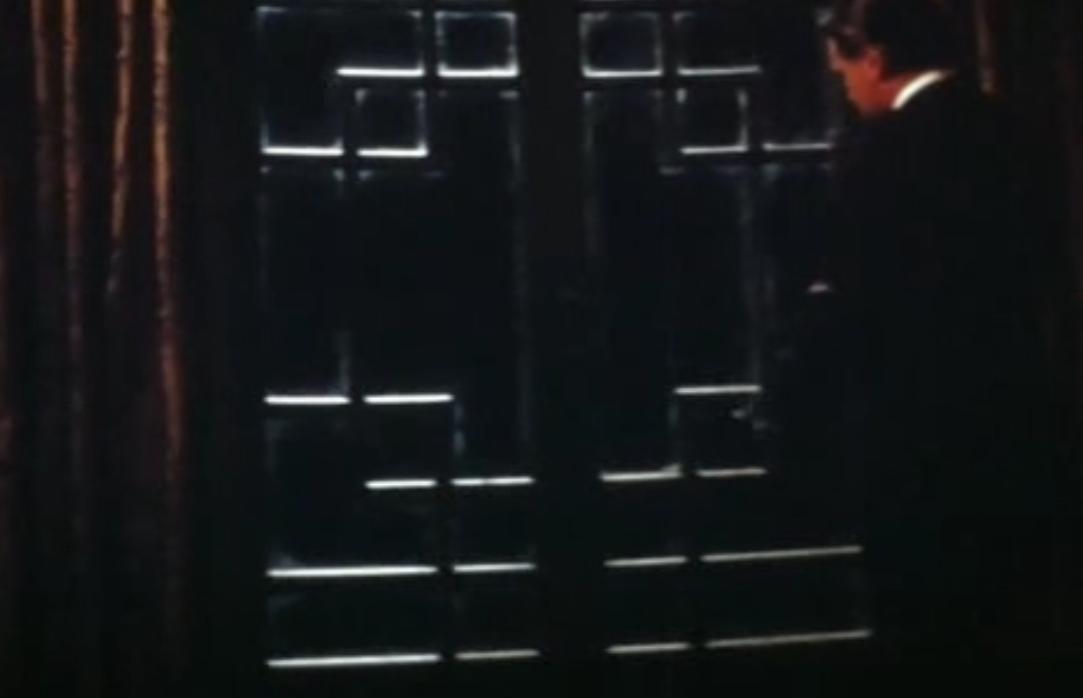
The molding is intricate and familiar. Upon review, it is almost identical to the Legendary Pictures logo. Legendary Pictures is a film company established in 2005.

We follow Cobb out this window and through the next two levels of dreams until Saito hires him to “incept” Robert Fischer. Fischer also seems familiar. At first I couldn’t place him– I don’t know many pretty boys who inherited billion-dollar companies. It only hit midway, when a bag is thrown over his head and chemicals dumped onto his face.

The head-bag is highly reminiscent of The Scarecrow in Batman Begins. The chemicals are a clue; Scarecrow used gases to induce mental states in his victims.

You’ll say these are coincidences. So a door in a dream looks like a symbol. So Fischer really reminds me of a supervillain. But before you close this article, ask yourself: have you really looked at Cobb?

That jawline. That face, desperately squinting to appear young and old at the same time. Haven’t you seen all his mannerisms somewhere before?
You have. According to its profits, you and everyone else on earth has seen Titanic, which features one “Jack Dawson.” The resemblance is uncanny, and becomes frightening if you watch Titanic all the way to the end and realize Dawson isn’t real.

This will seem insane to some, but I believe Cobb and Dawson are the same person. Further, I believe Fischer and Scarecrow are the same person, and that nearly everyone else in Inception is some kind of pretender. The reason you don’t understand Inception is not that it was all Mal’s dream, or five dreams within dreams, or psychic backwash from limbo. It is actually more bizarre than any existing explanation: some plotted concoction, complete with mass human conspiracy, dynamic lighting and artificial orchestra, the whole thing either given too little external construction such that elements fail to make sense, or given so much thought that we can’t grasp it. You might call it “a movie.”
All of the above images are the property of their related studios and filmmakers - if you believe they are from films.
Monday, August 16, 2010
Bathroom Monologue: Dialogue that sprang after hearing that Leo Tolstoy wished people only to write for posterity, never for their own times
The next guy in line was another overweight middle-aged man. Gloria checked her watch; only twenty minutes left until she could abandon this table and get drunk with the somebodies of this writer’s fair.
"I've got a crack of a deal for you," said the man, setting down a briefcase. He pulled out three reams of paper. Gloria tensed – another white guy with the next Fantasy epic, the seventh this morning.
She tried to sound professional when she asked, "What's the pitch?"
"Your company has printed more copies of Leo Tolstoy's books than any in history. The e-book releases have been brilliant."
At least he aimed higher than being the next Stephanie Meyer. That won him points.
"So you think you write like Tolstoy?"
"I wouldn't tell you if I did.” He patted his stack of papers. “You, and everybody in this building, is never to know what I write."
"Come again?"
"See, we must write for the future and only publish once we're dead. You must believe this because you've profited so much off of Tolstoy’s reprints. I embrace your ideology. For just $100,000 a year, I will hide all of my fiction. I won't even show it to my roommate. Upon my death, it'll be turned over to your publishing house. You'll have every word of it and can plan whatever release schedule you want, secure in the knowledge that no word of it was tainted with desire for fame in my own lifetime."
She leaned to the side. The next three people in line were teen girls dressed in black, who almost certainly thought they were the next Stephanie Meyer. Fine. Mr. Tolstoy had won himself an interview.
"Only one hundred thousand, you say?"
"Per year.” He smiled conciliatorily. “I eat a lot of fastfood, so it won't be that many years."
"So where did you get this idea?"
"For $250,000, I'll die tragically. Look at what posthumous buzz did for Sylvia Plath. It still works, too: The Dark Knight rode Heath Ledger’s corpse. You can paint me as severely tortured or cursed to live in a broken world. Whatever your house digs out of my manuscripts and thinks will sell."
Gloria tried to restrain her smile from leaving the polite zone. "It's against our policy to have writers kill themselves."
"Not a suicide!” he slapped his thigh like she was his best buddy. “I'm just saying I'll go places. Baltimore. Baghdad. Spraypaint in Singapore. If you've got a publicist I could even get into legal troubles, to set up a backstory. A couple of international incidents in China and I bet you'll recoup all your fees on me from the biopic."
"You think big."
"I've got to. I'm planning to write the great novels of the next generation, and they're not even here yet."
"And what do you predict is coming?"
"I can't tell you.” He smoothed out the top sheet on his ouvre. “The only way you'll know is by outliving me and reading my books. Or, watching the news. But if you play it right, I’ll be the news by then."
"I've got a crack of a deal for you," said the man, setting down a briefcase. He pulled out three reams of paper. Gloria tensed – another white guy with the next Fantasy epic, the seventh this morning.
She tried to sound professional when she asked, "What's the pitch?"
"Your company has printed more copies of Leo Tolstoy's books than any in history. The e-book releases have been brilliant."
At least he aimed higher than being the next Stephanie Meyer. That won him points.
"So you think you write like Tolstoy?"
"I wouldn't tell you if I did.” He patted his stack of papers. “You, and everybody in this building, is never to know what I write."
"Come again?"
"See, we must write for the future and only publish once we're dead. You must believe this because you've profited so much off of Tolstoy’s reprints. I embrace your ideology. For just $100,000 a year, I will hide all of my fiction. I won't even show it to my roommate. Upon my death, it'll be turned over to your publishing house. You'll have every word of it and can plan whatever release schedule you want, secure in the knowledge that no word of it was tainted with desire for fame in my own lifetime."
She leaned to the side. The next three people in line were teen girls dressed in black, who almost certainly thought they were the next Stephanie Meyer. Fine. Mr. Tolstoy had won himself an interview.
"Only one hundred thousand, you say?"
"Per year.” He smiled conciliatorily. “I eat a lot of fastfood, so it won't be that many years."
"So where did you get this idea?"
"For $250,000, I'll die tragically. Look at what posthumous buzz did for Sylvia Plath. It still works, too: The Dark Knight rode Heath Ledger’s corpse. You can paint me as severely tortured or cursed to live in a broken world. Whatever your house digs out of my manuscripts and thinks will sell."
Gloria tried to restrain her smile from leaving the polite zone. "It's against our policy to have writers kill themselves."
"Not a suicide!” he slapped his thigh like she was his best buddy. “I'm just saying I'll go places. Baltimore. Baghdad. Spraypaint in Singapore. If you've got a publicist I could even get into legal troubles, to set up a backstory. A couple of international incidents in China and I bet you'll recoup all your fees on me from the biopic."
"You think big."
"I've got to. I'm planning to write the great novels of the next generation, and they're not even here yet."
"And what do you predict is coming?"
"I can't tell you.” He smoothed out the top sheet on his ouvre. “The only way you'll know is by outliving me and reading my books. Or, watching the news. But if you play it right, I’ll be the news by then."
Sunday, August 15, 2010
Bathroom Monologue: A Biography Inaction
Only a couple of them could say they'd heard of Gerard Blune before his family came to close the estate. Black cars streamed away from dusky doors, and a non-entity of a neighbor was done. For his life on Cairo Lane, Mr. Blune was only one more ugly car driving by at 5:30 and a reliable spring of peanut butter cups on Halloween. The rest of his life there was to be defined in the months after it ended.
The first snow fell a week later. Nobody shoveled the sidewalk and most were disgruntled to find the massive drifts plows had left completely burying their walkways. Previously neighbors assumed that the town shoveled it all out.
When the Route C school bus broke down, the PTA was disgruntled to learn that their yard had no mechanic on payroll. Apparently there wasn't any mechanic in the district licensed to service for that class of vehicle. Previously a G.H. Blune had done maintenance for free, maintaining his license at his own expense. One bus driver claimed the Samaritan had worked big vehicle maintenance during The War.
At the school play, one voice was missing in the typical chorus of laughter. People felt it where they didn't recognize it.
When ice took out the power in December, the neighbors waited for it to return. It was a bitter cold night before they realized no one called the outage in.
Opening night of the biggest movie of the year, one voice was missing form the typical chorus of gasps. More people felt that.
Spring came and the new man in that house didn't mow as often, nor as evenly. The lawn had once looked as manicured as a football field at kickoff. Neighbors on either side of the house picked up their lawn care in Blune fashion. They spited him so much that they almost made the mistake of not introducing themselves.
The first snow fell a week later. Nobody shoveled the sidewalk and most were disgruntled to find the massive drifts plows had left completely burying their walkways. Previously neighbors assumed that the town shoveled it all out.
When the Route C school bus broke down, the PTA was disgruntled to learn that their yard had no mechanic on payroll. Apparently there wasn't any mechanic in the district licensed to service for that class of vehicle. Previously a G.H. Blune had done maintenance for free, maintaining his license at his own expense. One bus driver claimed the Samaritan had worked big vehicle maintenance during The War.
At the school play, one voice was missing in the typical chorus of laughter. People felt it where they didn't recognize it.
When ice took out the power in December, the neighbors waited for it to return. It was a bitter cold night before they realized no one called the outage in.
Opening night of the biggest movie of the year, one voice was missing form the typical chorus of gasps. More people felt that.
Spring came and the new man in that house didn't mow as often, nor as evenly. The lawn had once looked as manicured as a football field at kickoff. Neighbors on either side of the house picked up their lawn care in Blune fashion. They spited him so much that they almost made the mistake of not introducing themselves.
Saturday, August 14, 2010
Bathroom Monologue: Colored Language
“Most of this rainbow is occupied. Blue language is profane. Purple prose is overwritten. Clearly that end is a slum of bad writing. But on the other side? Yellow journalism is jingoistic and biased. The Little Red Book is even worse, as is Pinko literature. Towards the middle are all things Green, environmentally safe and positive, but we don’t run an environmental organization. It’s unaffiliated. Off the spectrum you’ve got black and white, but in a postmodern landscape you don’t want to be accused of seeing things in black and white. Only orange and brown have no particular affiliations, so I guess the blog will have to be in those colors. Maybe we can define them as ours.”
Friday, August 13, 2010
Bathroom Monologue: Consultation on the Mystery Thief
Wesley waited for the security officer to crack a smile and confess that this was a joke. When the man didn’t laugh, Wesley opened the folder and read the report himself.
“So your intruder only comes at night, even though security detail doubles after six PM?”
“Yes.”
“And you’ve got surveillance tapes on the river bridge showing he never takes it, even though that’s the only way to the highway, and that means he’d have to go through the ravine?”
“Yes.”
“And the only footprints you can find are in a third floor air duct that is so high up and so tightly closed that only a bird or a bat could get up there? You don’t think your mystery thief rides a flock of parakeets in there, do you?”
“No sir.”
“You’re absolutely certain it’s not someone on staff? You do cavity searches before they go home?”
“Yes. We've doubled the amount since the robberies and haven't found an ounce of the goods. The men hate it.”
Wesley winced. “They should. Because you have a lot of recording equipment to not catch even one photo of your mystery thief. You’re sure you don’t have just one, that you’re not showing me?”
“I’ve seen him. So have three others But he evades the cameras somehow.”
Wesley rubbed his eyebrows with thumb and forefinger.
“You’re being robbed by somebody who won’t cross water and can’t be photographed. Fine. You’ve got a vampire.”
He got up, dropping the folder onto the desk. When he reached for his briefcase, the officer asked, “Are you sure that’s the only explanation?”
“No,” he said. He walked to the door. “Your superiors could be playing a prank on me. That’s what I believe, but I’m just a consultant.”
“So your intruder only comes at night, even though security detail doubles after six PM?”
“Yes.”
“And you’ve got surveillance tapes on the river bridge showing he never takes it, even though that’s the only way to the highway, and that means he’d have to go through the ravine?”
“Yes.”
“And the only footprints you can find are in a third floor air duct that is so high up and so tightly closed that only a bird or a bat could get up there? You don’t think your mystery thief rides a flock of parakeets in there, do you?”
“No sir.”
“You’re absolutely certain it’s not someone on staff? You do cavity searches before they go home?”
“Yes. We've doubled the amount since the robberies and haven't found an ounce of the goods. The men hate it.”
Wesley winced. “They should. Because you have a lot of recording equipment to not catch even one photo of your mystery thief. You’re sure you don’t have just one, that you’re not showing me?”
“I’ve seen him. So have three others But he evades the cameras somehow.”
Wesley rubbed his eyebrows with thumb and forefinger.
“You’re being robbed by somebody who won’t cross water and can’t be photographed. Fine. You’ve got a vampire.”
He got up, dropping the folder onto the desk. When he reached for his briefcase, the officer asked, “Are you sure that’s the only explanation?”
“No,” he said. He walked to the door. “Your superiors could be playing a prank on me. That’s what I believe, but I’m just a consultant.”
Thursday, August 12, 2010
Bathroom Monologue: No Taxation
At age 11, John proposed a tax plan where you only paid for what services you wanted...
For a while they institutionalized a “get what you pay for” system. It was supreme democracy. On your taxes everything was itemized. Don’t want to support deadbeats? You don’t pay for welfare. Who wants to build schools in Afghanistan? Cut that.
There was a surprising number of people who thought they could get by without police. Naturally you had minorities who were historically abused by them anyway, but there were many middle class and upscale people who didn’t check the box. There wasn’t going to be a sign on your lawn that you didn’t get 9-1-1 service, so nobody would know your house was vulnerable to robbery. The appearance of protection should have remained the same.
Hacktivists made a list. The same kind of people who, in the name of privacy issues, published whenever somebody said they were leaving home via Facebook or Twitter, got ahold of tax lists. There was an app to modify Google Maps (called “CopMap”) so that you could see all the unpoliced homes colored in ironic blue.
Robberies went up. They also went down. Statisticians still debate over the charts. Homes were more likely to be targeted for vandalism within 72 hours of a CopMap posting in most major east and west coast cities. Decreases in crime stats were pegged to all the people who realized nobody would come if they called for help; why report it when no one cared? And the complexity of the debate over drops in police misbehavior and brutality reports remains staggering.
It was worse for the people who paid. They expected all the same services. In fact, they expected better than the same, because a) they’d elected to pay, and b) people always over-expect from the government. But police departments tanked. They couldn’t fix vehicles or afford overtime. They couldn’t afford half-staff and there were major layoffs. Police Unions went on strike, but against who? Federal, state and city governments did not have the money they wanted.
Applications for security guards and security-related jobs shot up by 1,100% in the first year.
The people who paid actually didn’t get what they paid for, because they didn’t have enough money to support the system. Most systems had already malfunctioned on their meager fully-taxed budgets. On fraction-taxed budgets?
Gun sales went up, for personal and home defense. The profligation of firearms was not the deterrent the NRA wanted it to be. While there weren’t many police to take reports, people who arrived at ERs for “self-inflicted” or “accidental” gun wounds skyrocketed. They were furious to learn that funding for ERs had been consolidated under one of the boxes they hadn’t checked, and that most hospitals were no longer honoring uninsured emergency walk-ins.
The ER fiasco got a lot of attention. So did the collapse of the single-payer insurance system, which we’d only established recently. Only the military maintained operations, built on years of doing outrageous things with outrageously less money than you thought they were getting. So many things went awry that the police became a secondary issue, because they were who you called when something else broke.
The Weisman/Gladhart ticket rode to the presidency on the first-ever successful campaign of tax increases. They proposed them as small and strategic. They promised parts of tax forms would still be itemized. They lied. They had to.
For a while they institutionalized a “get what you pay for” system. It was supreme democracy. On your taxes everything was itemized. Don’t want to support deadbeats? You don’t pay for welfare. Who wants to build schools in Afghanistan? Cut that.
There was a surprising number of people who thought they could get by without police. Naturally you had minorities who were historically abused by them anyway, but there were many middle class and upscale people who didn’t check the box. There wasn’t going to be a sign on your lawn that you didn’t get 9-1-1 service, so nobody would know your house was vulnerable to robbery. The appearance of protection should have remained the same.
Hacktivists made a list. The same kind of people who, in the name of privacy issues, published whenever somebody said they were leaving home via Facebook or Twitter, got ahold of tax lists. There was an app to modify Google Maps (called “CopMap”) so that you could see all the unpoliced homes colored in ironic blue.
Robberies went up. They also went down. Statisticians still debate over the charts. Homes were more likely to be targeted for vandalism within 72 hours of a CopMap posting in most major east and west coast cities. Decreases in crime stats were pegged to all the people who realized nobody would come if they called for help; why report it when no one cared? And the complexity of the debate over drops in police misbehavior and brutality reports remains staggering.
It was worse for the people who paid. They expected all the same services. In fact, they expected better than the same, because a) they’d elected to pay, and b) people always over-expect from the government. But police departments tanked. They couldn’t fix vehicles or afford overtime. They couldn’t afford half-staff and there were major layoffs. Police Unions went on strike, but against who? Federal, state and city governments did not have the money they wanted.
Applications for security guards and security-related jobs shot up by 1,100% in the first year.
The people who paid actually didn’t get what they paid for, because they didn’t have enough money to support the system. Most systems had already malfunctioned on their meager fully-taxed budgets. On fraction-taxed budgets?
Gun sales went up, for personal and home defense. The profligation of firearms was not the deterrent the NRA wanted it to be. While there weren’t many police to take reports, people who arrived at ERs for “self-inflicted” or “accidental” gun wounds skyrocketed. They were furious to learn that funding for ERs had been consolidated under one of the boxes they hadn’t checked, and that most hospitals were no longer honoring uninsured emergency walk-ins.
The ER fiasco got a lot of attention. So did the collapse of the single-payer insurance system, which we’d only established recently. Only the military maintained operations, built on years of doing outrageous things with outrageously less money than you thought they were getting. So many things went awry that the police became a secondary issue, because they were who you called when something else broke.
The Weisman/Gladhart ticket rode to the presidency on the first-ever successful campaign of tax increases. They proposed them as small and strategic. They promised parts of tax forms would still be itemized. They lied. They had to.
Wednesday, August 11, 2010
Bathroom Monoloogue: ****ing Banshees
Tad licked his lips and looked across the dance floor. They could barely hear each other over the band, but Brian knew who his friend was talking about.
“She’s got a nice ass, man, but she’s a succubus. That’s ‘Do Not Enter’ territory. No way I’d hit that.”
“Hey.” Brian jabbed him in the side. “Firstly, you’re not going to approach Sheena because she’s my girl. Secondly, she’s not a succubus.”
“Whatever man. I’m just saying she’s killed her last three sack buddies. But if you say she ain’t a succubus…”
“She isn’t. She’s a banshee. And in the heat the passion she… screams.”
Tad clapped and bent over laughing, looking up at his friend.
“That it? For real?”
Brian shrugged. “Popped their ear drums and fried their brains. Three guys.”
“At once?” Tad hooted. “Girl’s wild.”
“You ass. No. Her first boyfriend, then the kind of guys who swoop in to pick off the girl in mourning. After her third time she took a vow of celibacy.”
“You ain’t hittin’ that?”
“You thought she was a succubus a minute ago!”
“Still. That’s mad crazy. Why even put up with that?”
“She’s got soul, dude. Like, traits. She’s funny. She’s taking an Italian cooking class. Stuff.”
“You’re lying. She got you under her song spell or something?”
“That’s sirens, you tool. She’s just… a change of pace.”
“You never do that?”
“I said! It’s not about that.”
“Fucking banshees.”
“I would but she’s got a vow of celibacy!”
As fortune would have it, the music ended in the middle of Brian’s sentence. So did his relationship to the banshee.
“She’s got a nice ass, man, but she’s a succubus. That’s ‘Do Not Enter’ territory. No way I’d hit that.”
“Hey.” Brian jabbed him in the side. “Firstly, you’re not going to approach Sheena because she’s my girl. Secondly, she’s not a succubus.”
“Whatever man. I’m just saying she’s killed her last three sack buddies. But if you say she ain’t a succubus…”
“She isn’t. She’s a banshee. And in the heat the passion she… screams.”
Tad clapped and bent over laughing, looking up at his friend.
“That it? For real?”
Brian shrugged. “Popped their ear drums and fried their brains. Three guys.”
“At once?” Tad hooted. “Girl’s wild.”
“You ass. No. Her first boyfriend, then the kind of guys who swoop in to pick off the girl in mourning. After her third time she took a vow of celibacy.”
“You ain’t hittin’ that?”
“You thought she was a succubus a minute ago!”
“Still. That’s mad crazy. Why even put up with that?”
“She’s got soul, dude. Like, traits. She’s funny. She’s taking an Italian cooking class. Stuff.”
“You’re lying. She got you under her song spell or something?”
“That’s sirens, you tool. She’s just… a change of pace.”
“You never do that?”
“I said! It’s not about that.”
“Fucking banshees.”
“I would but she’s got a vow of celibacy!”
As fortune would have it, the music ended in the middle of Brian’s sentence. So did his relationship to the banshee.
Tuesday, August 10, 2010
Bathroom Monologue: Are Videogames Art? Listing Curiosities
-The Mona Lisa never got a DLC Weapons Pack.
-A boy who spends all day reading literary fiction is attractive to girls. If he spends all day playing Braid, they wonder if he’s a hair stylist.
-Activision was making an action shooter game set in the infamous Fallujah conflict before public outcry made them cancel it. We have already seen several thriller movies set in the Iraq War.
-You can major in Southern Literature at college. You can talk about how JRPGs are too effeminate on a forum.
-Google “women authors” and there is only one picture of a naked lady. Google “women actors” and about half of the images show skin or are deliberately sexual in some way. Google “women videogames” and nearly every image is sexualized. There is also the image of a topless male action figure.
-There are hackneyed novelizations of movies. There are hackneyed videogame tie-ins of movies.
-Once I took a friend to see The Grudge. She curled into the fetal position in her chair and bravely watched the entire movie. Once I subjected the same friend to play Silent Hill 2. She made it across the introductory parking lot, where nothing happens, before throwing down the controller and screaming in fear that she could not do this anymore.
-There are a great number of metafictional novels. There are very few games about game theory.
-Director Guillermo Del Toro collaborated with Chuck Hogan to write The Strain, a trilogy of novels about vampires. Peter Jackson collaborated with Michel Ancel to make the King Kong videogame.
-With a pen and paper you can write a screenplay. With a digital camera you can shoot an indy film. With Sony’s Little Big Planet you can design your own levels. With Microsoft’s Kinect, you can paint on the television screen just by waving your hands.
-A boy who spends all day reading literary fiction is attractive to girls. If he spends all day playing Braid, they wonder if he’s a hair stylist.
-Activision was making an action shooter game set in the infamous Fallujah conflict before public outcry made them cancel it. We have already seen several thriller movies set in the Iraq War.
-You can major in Southern Literature at college. You can talk about how JRPGs are too effeminate on a forum.
-Google “women authors” and there is only one picture of a naked lady. Google “women actors” and about half of the images show skin or are deliberately sexual in some way. Google “women videogames” and nearly every image is sexualized. There is also the image of a topless male action figure.
-There are hackneyed novelizations of movies. There are hackneyed videogame tie-ins of movies.
-Once I took a friend to see The Grudge. She curled into the fetal position in her chair and bravely watched the entire movie. Once I subjected the same friend to play Silent Hill 2. She made it across the introductory parking lot, where nothing happens, before throwing down the controller and screaming in fear that she could not do this anymore.
-There are a great number of metafictional novels. There are very few games about game theory.
-Director Guillermo Del Toro collaborated with Chuck Hogan to write The Strain, a trilogy of novels about vampires. Peter Jackson collaborated with Michel Ancel to make the King Kong videogame.
-With a pen and paper you can write a screenplay. With a digital camera you can shoot an indy film. With Sony’s Little Big Planet you can design your own levels. With Microsoft’s Kinect, you can paint on the television screen just by waving your hands.
Monday, August 9, 2010
Bathroom Monologue: Randy and His Maker
Randy and his maker rounded the furthest clouds. Cherubs jammed out on drums and acoustic guitars, and rivers ran among them to pour out as rain for the world below. It wasn’t exactly what Randy wanted from death, but it beat dying.
“So the one thing you can never forgive is denying you?” he asked.
“That’s right.”
“Never? Even if they don’t mean it?”
Randy’s maker paused to tweak the third tuning peg on a cherub’s guitar.
“I don’t take it lightly.”
“What if it’s Opposite Day?”
Randy’s maker looked up. “What’s that?”
“You know. Opposite Day. You see a white cloud, you say it’s black. If it’s evening, you say it’s morning. What if somebody said you weren’t there on Opposite Day?”
“I’d forgive it.”
“But you never forgive it.”
“That’s right.”
“But you just said you would.”
“No I didn’t.”
“Yeah you did.”
“No I didn’t.” Randy’s maker continued along the clouds. “It’s Opposite Day.”
“Oh, you’re good.”
“So the one thing you can never forgive is denying you?” he asked.
“That’s right.”
“Never? Even if they don’t mean it?”
Randy’s maker paused to tweak the third tuning peg on a cherub’s guitar.
“I don’t take it lightly.”
“What if it’s Opposite Day?”
Randy’s maker looked up. “What’s that?”
“You know. Opposite Day. You see a white cloud, you say it’s black. If it’s evening, you say it’s morning. What if somebody said you weren’t there on Opposite Day?”
“I’d forgive it.”
“But you never forgive it.”
“That’s right.”
“But you just said you would.”
“No I didn’t.”
“Yeah you did.”
“No I didn’t.” Randy’s maker continued along the clouds. “It’s Opposite Day.”
“Oh, you’re good.”
Sunday, August 8, 2010
"Headlights Go Out" at Thaumatrope
I had another super-short published at Thaumatrope recently. This one is about the old question: what happens when you turn the headlights on while traveling at light speed?
You can read it here.
You can read it here.
Saturday, August 7, 2010
Bathroom Monologue: Ranting Moon Hermit
“I should have seen it coming. You thought you were the center of the universe from birth. Humans said their hometown was at the middle of the planet. The sky was fixed over it your ground, or revolving around it. You had no evidence for it, but you were you and that’s all you needed. Evidence wound up saying you whirled around the sun and damned if it didn’t take an age for you to cave into it. But then? Why your sun was at the middle of the cosmos. You had God for a while and the first thing you did was put words in His mouth saying you were the owner of all the land, sea and other creations. He made everything, but you were His image, and His favorite, and His best. Eventually you cave into the evidence that you aren’t unique, that you’re one of a trillion results of the same evolutionary process, and that you evolved on a planet that wasn’t at the center of anything, and you still act like the whole universe is yours. Now you pretend that you invented meaning and right and wrong! That even if it isn’t about anything, it’s all about you. Yesterday you polluted your skies to yellow, and tomorrow you’ll strew trash all over Mars. This is why I’ve avoided you, and I’m not alone. What god, ghost or extraterrestrial wants to hear about “human rights?” You’re a fucking diva species. I’ve dealt with them before and won’t have them on my moon again.”
Subscribe to:
Posts (Atom)
 Counter est. March 2, 2008