Thursday, May 10, 2012

Bathroom Monologue: Everyone's Advice on Writing Ever (Graph)


This is a joke I make a lot, but the tipping point was reading Jane Friedman’s advice: “You have to go through rounds of revisions and will likely have to change things you don’t want to change. But you must approach the process like a professional, not a creative artist.”

So here’s a facile graph of industry advice I’ve received over the years.


Wednesday, May 9, 2012

Bathroom Monologue: Smaller than Our Fathers


“You’ve got to stop, man. This is the only reason you smoke.”

“It’s not. I like the flavor.”

“I have never seen you reach for a pack when we weren’t writing skits about parents”

“My father built homes, okay? It throws me sometimes. He did his work. His work, when he died, that’s all anyone said.”

“You’re doing your work. You do it better than half that room.”

“He hated what I’m doing, never mentioned watching a single episode right up to the day he died. He’d still hate it.”

“He wouldn’t. Swear to God, he’d be proud. I bet you he watched and didn’t say.”

“No, you didn’t know him. This guy was midnight runs and baseball and carpentry, everything with his hands. He was intense before I knew the word. There was no better man.”

“There’s at least one. He’s standing in front of me, trying to give himself lung cancer.”

“You didn’t know him.”

“Then teach me about him. Teach the audience – we’re writing about parents, so channel him. Dads who drive their sons crazy make great drama anyway.”

“You’re weird, you know that? Even for this town.”

“At least I keep my shit together! Maybe because I had two moms.”

“Can we write about them?”

“Them meeting your workman dad?”

“Oh, God.”

“I didn’t mean to…”

“No. It’s too funny. Now I have to write it.”

“Oh, well then you’re welcome. Now give me your lighter.”

Tuesday, May 8, 2012

Bathroom Monologue: The New Hot Girl is Evil


So the new hot girl is evil, right?

People are looking at me like I’ve been rude. So she’s not evil? Because she’s hot and likes you. Really, who falls in love at first sight?

Listen, I’m not stereotyping women. There are abundant attractive women in this city who are not evil. I’m stereotyping you. Because she’s hot, and sounds connected, you’re…

You.

Come on, don’t make it like this. You’ve got a great personality. And the numbers. You’re good with numbers. You’re… somewhat good with numbers and after I escape and reclaim the throne, I will totally score you a job at the treasury. And after that, attractive women actually be interested in you for a legitimate reason: your money.

But she’s an assassin. Look at the tiny calves. The coquettish reflexes. Do I have to draw you a diagram? She’s a fucking ninja. She’s using you to get to my jugular.

You do not get to be hurt by this! This is the game. I gave up a lot to escape, and they have a bunch of ways to kill me. I’m the lost prince, twice exiled, bound for glory. And I look it. If she wants to bang either of us, it’s me. But she doesn’t want to bang me. She wants to poison my toothpaste and make it look like an aneurism. You think she’s honest, call her in a week when I’m a safe distance away from the city. Like she’ll talk to you then.

Don’t look that way. No, come on, that is the Romeo-and-Juliet look, the fucking I’m-going-to-love-her-no-matter-what bullshit, you cut that out! I swear to God, if you storm off to her, she’ll turn it into a hissy fit, and you’ll cry, and she’ll pretend to be strong, and she’ll wind up with your room key, and I’ll wind up face-down in a toilet. Because of you.

Give me the room key. Give me the room key. Give—give it! No, I don’t trust you with hot assassin girl. I have a kingdom to think of. A kingdom full of hotties. I’ll send you some, just don’t--

Great, the guards found us. I’m sure you don’t think this is your fault either.

Monday, May 7, 2012

Bathroom Monologue: Sentence in Hell


Hell is largely what you expected, Mr. Smotes. Horned devils wielding pitchforks, tossing stacks of bodies into moats of char and lava. Whirlwinds of disease scour the faces of sinners. Rivers of ground glass and rains of needles rush to refresh and ravage. And you get so hungry. So very hungry. If you brave the weather and the demonic rapists, the only food you’ll find is so fetid it leaves you hungrier and weaker and smaller and ultimately less - until you question what’s left of yourself. Hell is almost exactly what television led you to expect, Mr. Smotes.

Except it’s your daughter who serves your sentence.

Sunday, May 6, 2012

John's Versatile Answers, EST 2012

You may recall that I recently fixed the Versatile Blogger Award. In doing so I added six interview questions to the award, but would only answer them after all six of my recipients did. Well, they have, and so now I have to admit things about myself. I promise to make them uncomfortable.

1. What's the last sentence (from any of your work) that made you feel pride in writing?
--After receiving some theta manuscripts back recently, I’ve found I like more of my book than feels appropriate. I love this weird thing. The last line that made me almost ashamed of myself to enjoy having found was this relationship advice:

“You can go find her. When you do, if she’s worth it, take no excuses and abide. If she isn’t, masturbate. Words of my father.”

2. What’s the last work of fiction that left you envying the creator? In what way did you envy he/she/it/them?
--Thomas Pynchon’s The Crying of Lot 49 hit me pretty hard. There is not one page for at least the first hundred pages whereon he didn’t write at least one notion, one sentence or paragraph unlike anyone else has ever written. Vastly culturally literate while being unafraid of silliness, intimately knowledgeable about people’s pettiness and the frequent apathy of fate, culminating in a game of Strip Trivia. I don’t necessarily want to have written The Crying of Lot 49, but I write late into many nights pursuing that enticing output.

3. In your entire life, what have you most catastrophically failed at cooking or baking?
--My culinary arts are limited, and so my failures are mostly mundane. However, I am still haunted by a calamitous case of macaroni. I returned to the kitchen after only a few minutes to find all the water boiled away, and every macaroni having gone vertical and burned to the bottom of the pot, so that I was faced with a cast coral reef of inedible dinner. Some of the macaroni-ends even wriggled and puckered in the heat, in such a sphinctorial fashion that I was off pasta entirely for months. It took an hour to scrape all that crap off.

4. What field of science most frequently inspires you?
--Physics. It unites all things miniscule and enormous. We are made up of things so small we can’t see them, and we contribute to a world so big we can’t recognize it. Physics also rings both those scales into viewable context. Like G.K. Chesterton, I feel distinct awe that everything and everyone is made of the “one stuff.” It’s a versatile stuff.

5. What task most recently frightened, grossed you out or otherwise intimidated you, such that you got someone else to do it?
My family recently bought me a cell phone so that I won’t die in a ditch somewhere without calling. Upon arrival it required some thirteen different calls to activate and set up. After about four I was ready to shatter the device against a wall, and so you could say I was intimidated to the point where I asked them to do the rest. I hate you, automated operator.

6. Who is your favorite dead author? Or, if there is no single such person, name six of your beloved dead authors (in no necessary order).
You may have guessed that I have no single favorite. But here are six beloved writers: Mark Twain, Jonathan Swift, Douglas Adams, Homer, J.R.R. Tolkien and Aleksandr Solzhenitsyn.

Saturday, May 5, 2012

Bathroom Monologue: The End of Food, OR, Did You See It Coming?

"I don't see why we shame food when it's so important. Digestion is the center of life! Once upon a time men hunted wild meat all day, women dug roots all day, and they loved each other for every bit of it. It was all social. Teens were begging to get involved.

"We pay a premium for pesticide-free kale and grass-fed beef. And to prepare it? Last night I went into the kitchen to thank the chef, and she was flattered. And when I tipped our waiter thirty percent, he could have kissed me. From harvesting to preparing to delivering it to the table, it's all glamorous and everyone's grateful, but two hours later I offer a teenager fifty bucks to wipe my ass, and they sent me to jail! The whole culture is mixed messages, man."

Friday, May 4, 2012

Bathroom Monologue: The Great Master Gry


It took the boys three seasons to find Great Master Gry. He’d gone reclusive in the modern wilderness: slums. It would have been easier to track of the man on a mountain top or distant island. In a sea of scrawny, old foreigners, with names in another alphabet, he was almost invisible.

That was on purpose. Gry refused to train them, even when they offered him their entire trust funds. They sent him ten newly-sewn suits, and ten handmaids, and ten immaculate meals from the master chefs of the metropolis. He left their gifts unworn, unsullied, and uneaten. The boys found their food rotting in the alley, supped upon by stray imps and tentacle monsters.

They did not give up easily. They accosted him every time he stepped outside – for the bathroom, for the mail, for his morning walk or sunset meal. He only ate once a day, and refused anything but the smallest container of unprocessed rice, and he refused conversation when they took supper alongside him, spurning their money.

On the third sunset, while he was out at his meal, they bribed the landlord and broke into his apartment. Gry returned home to find no cracks in his ceiling, no vermin in his walls, and for the first time in twenty-one seasons, that his single light fixture actually turned on. They’d left it on. He sat up with the light on all night long, though he did not invite the boys in.

The next morning, though, he invited them outside. The Great Master would begin their training just as soon as they donned more practical clothing.

The first lesson was of Stamina. The boys would pick up every piece of trash in the adjacent street, which stretched for four kilometers. No newsprint, turd or broken bowl could be left behind, and they had only two hours to collect all of it. Being boys of unfairly fair youth, they managed it, even if they collapsed at the end.

They thought it unfair until the next day, when they were assigned the next street over, and only an hour and a half. Every consecutive day drew another street of waste.

After four days of the exhausting work, Great Master Gry added a second lesson: Perception. The police of the city were needlessly abusive to many parties, running them out or collecting extortion from shops. The boys were not allowed lunch until each could find at least one police-servant who had broken the code of conduct and reported them all back to Gry. In a week, he increased their assignment to three a-piece. In three weeks, they found it much harder to find such police-servants, much as the police-servants found it quite difficult to retaliate against the children of the rich.

Every day they had their lesson in Stamina and Perception. They chaffed to learn exotic fighting styles, of the Charred Fist and the Unknown Walking. Yet as quickly as they could clear a street of refuse, Gry said they were not ready. He introduced the third lesson: Agility. It seemed that serpents and rats infected with tentacalia had beset the slum in recent seasons, and were often snatching babies or otherwise tearing up tenement ceilings. The only way to combat them was to scale the very structures they tormented.

Building upon their existing stamina and cleverness, the boys had to dispatch a dozen tentacled fiends per afternoon, and doing so meant either flying along scaffolds or swinging from ropes. Often Gry took his sunset meal on the sidewalk while watching the boys in their spectacular fights with the tentacle monsters. He was seldom alone; they drew great crowds of the poor, who could always use a little more entertainment.

Gry was the only one not enjoying the spectacle. He had to make up a fourth exercise for them before they got too good. Eventually the boys would realize what you already have, and they would be quite angry about it. Perhaps some mysticism about Patience? He hoped that would take, or if it didn’t, that they finished cleaning up the slums before killing him.

Thursday, May 3, 2012

Bathroom Monologue: “You can kill someone with a needle?” -Lian Hearn’s Kaede in Across the Nightingale Floor


-Drive it into the throat or jugular. Surely everyone thinks of that one.

-Drive the needle through the ear canal and into the brain.

-Puncture the balloon the target is riding in and let target plummet to the earth.

-Puncture a perfectly normal balloon behind them (pending heart condition).

-Puncture inhaler and instigate anything (pending asthma).

-Dip into poison. Poke.

-Trick the target into swallowing the needle. It hardly needs to make it that far, but it passes into the bowels you could get a high-score.

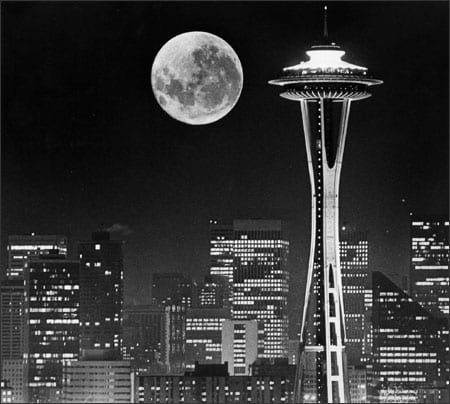
-Trick the target into joining you for a lovely meal on the upper floor of the Space Needle in Seattle, Washington. Push the target off the Space Needle in Seattle, Washington.

-Affix the needle to a slender rod and shoot it at the target from a bow.

-Place the needle in an appropriately-sized blowgun and shoot it at the target.

-Throw it:

Wednesday, May 2, 2012

Bathroom Monologue: Vampire Hunter Hunters, OR, I Won't Sparkle


"I can cross the bridge into town no matter how hard the river runs. The garlic growing in your garden means nothing, and I can enter your apartment unbidden.

"I won’t show up on security cameras because I’ve hacked them. You may see me in the mirror just before it happens. The holy water you keep in the dresser doesn’t matter. Your grandmother’s crucifix can’t hurt me unless you overhand it into my head, and I’m not going to let you do that.

"I don’t have an insatiable thirst for your blood. This is just a job to me, one of many The Council has hired us lowly humans to carry out. We’re just so good at killing each other, and their reasons are no worse than ours. When I’m done I’ll drive into the sunrise, well paid and unafraid. I won’t sparkle."

Tuesday, May 1, 2012

Teaser Tuesday: Across the Nightingale Floor by Lian Hearn

Teaser Tuesdays is a weekly blog hop hosted by MizB of Should Be Reading. My book for this week is Lian Hearn's Across the Nightingale Floor, an Asian-influenced Fantasy novel about two young people caught in a destructive feud between noble houses. This quote comes from Page 4.


"I told myself they
had run away:

My mother had taken
my sisters to the
safety of the forest.

I would go
and find them
just as soon as
I had found out

who was screaming."


It's a simple novel which I've just finished reviewing. It's heavy in foreign tropes, and wouldn't be a bad introduction to Japanese Fantasy, even though Hearn is Australian.


Everyone is welcome to Teaser Tuesday. The rules are as simple as:
• Grab your current book
• Open to a random page
• Share two (2) “teaser” sentences from somewhere on that page
• Avoid spoilers! Don't give too much away or you'll ruin it for the very people you're suggesting it to.
• Share the title & author, too, so that other TT participants can add the book to their TBR Lists if they like your teasers

Monday, April 30, 2012

Voting with Your Wallet


“Vote with your wallet” is a common free market refrain. Allegedly you’ll let the company know you support a product by paying for it. If you dislike Wal-Mart’s treatment of employees and engagements with sweatshops, you don’t buy anything there. And if you like that organic grocery on the corner, then you buy everything you can there in encouragement. There’s are flourishing e-communities of consumers who only buy self-published indy books for just these reasons.

But economic moralizing like this forces your message to be simple. In the last week, I’ve been wondering about the lack of nuance in “voting with your wallet,” thanks primarily to The Secret World of Arriety.

The Secret World of Arriety is a Japanese film by Hayao Miyazaki of Studio Ghibli. Miyazaki's an incredibly lauded and popular director, responsible for Spirited Away, Ponyo and Howl's Moving Castle. The Walt Disney Company bought the rights to distribute his movie in the U.S., like they do with all of his stuff. Before you grumble about the evils of Disney, recognize they paid to widely release a foreign 2D cartoon in our theatres. A wide release for any foreign film is hard; The Artist had to be a heavyweight Oscar contender just to get billionaires to consider distribution, and that was from Europe. When you compound that Arriety is an Asian movie, the chances of it otherwise showing up at the multiplex are alarmingly small.

Now let’s grumble about Disney. They removed the original Japanese voice track from The Secret World of Arriety, and recorded a fresh lip-synched English voice track. This is typically called “dubbing,” and is the alternative to subtitling a film. U.S. audiences notoriously dislike reading subtitles while watching a movie and are more likely to turn out in larger numbers if it’s dubbed instead of subbed.

Purists, particularly the kind of film fan who wants to experience something closest to the director’s original intent, were naturally unhappy with the change. Now all those voices Studio Ghibli had honed and coached were out in favor of Tobe McGuire and Amy Poehler. Instantly you got people buying foreign DVD’s, torrenting subtitled copies, and the argument, “Vote with your wallet.” In this case, that meant not paying for a movie that was presented in such a form.

But it’s not so easy to vote with my wallet here. Refusing to paying to see this movie does not send the message that I dislike dubbing. It’s a lost ticket sale on a foreign film, so the message they get is, “Another white guy won’t pay for foreign films. Let’s do Transformers 4.”

There’s no nuance in this protest. There is only the money a corporation can make off distributing movies I deeply wish would flourish in American markets. Friends, what do you do here?

Sunday, April 29, 2012

Bathroom Monologue: Corruption Vs. Incompetence


“These reformists. These ninnies! ‘I’d rather have an incompetent governor than a corrupt one.’ My God, I’d rather have an entire corrupt senate than an incompetent governor. The incompetent leader can’t do anything right no matter how much money you give him. For a corrupt senator all you’ve got to do is find out what he wants and then bribe him. Boom. End result: the legislation we want happens. They’re otherwise the same. Neither the incompetent jackass nor the corrupt jackass knows how to do his job better than you. But if you give the incompetent jackass a hundred thousand dollars for his re-election campaign? If you break some kneecaps so the environmental lobby shuts up? If you kidnap his daughter? He still can’t convince anyone else on the Green Committee to vote ‘No,’ because he’s incompetent. And then what do you do? You’ve got to kill a little girl, because she’ll talk, and who wants to do that? Incompetent people, that’s who.”

Saturday, April 28, 2012

Bathroom Monologue: What To Do With Haunted Relics

Okay, if I had to scatter seven sacred relics to prevent some mastermind from collecting them and ruling the world, I wouldn’t stash them in seven really obvious huge dungeons. Firstly, those don’t exist. Secondly, it makes them very easy for him to find. After about the third dungeon this supervillain is bound to realize where the other four are.

1) The first one goes down the Mariana Trench. It’s the deepest hole in the known world, under so many atmospheres of water that it would kill anyone who tried to reach it. In fact, we’ve barely explored the place with robotics. A tiny crystal star would be darn near impossible to find in that abyss.

2) Drop one of them into the cement foundation of a Parliament building, preferably deep into it. You would thus have to demolish a government building and clear all the rubble just to look for it, and even then you probably wouldn’t have destroyed the foundations holding it. We also get free security, as a Parliament building should have a lot of that lying around.

3) To be a total jerk, I’ll stow one of them on the next space probe headed for the outer reaches of the universe. It’s cheap, but considering this explorer pod is headed further out into space than we’ll probably ever send humans, it will be really hard to retrieve.

4) In the middle of the arctic storm zones, where despite global warming there is a constant subzero blizzard with zero visibility. Preferably we’ll drill a hundred-foot hole in the ice and drop it down there, then cover it up. Within minutes you’ll have no idea where we drilled the hole in all the hundreds of miles of tempestuous storm.

5) In classic Lord of the Rings fashion, we’ll drop one into the mouth of an active volcano. True, the indestructible relic won’t combust like Sauron’s jewelry, but hopefully it will sink a miles under the surface of the earth, cradled in boiling lava. Most volcanoes don’t erupt like a geyser, but spit up and drool down the slopes. However this hot lava will be lighter and flow easier than the relic, so it will be more likely to sink while the lava rises. If the sucker ever erupts so badly that the relic is coughed up, it will be hidden in the cooling magma, and even we won’t know where it is.

6) Drop the sixth into the deepest stretch of the wide Yangtze in China, a river so horribly polluted that humans won’t enter it, and all the wildlife has either died out or mutated. We’ll weight this relic down in a tungsten container that will be too thick to fully corrode, and dig into the riverbed. Maybe we’ll even attached a self-propelling drill to the bottom so that it can dig a huge hole behind it. With a few days of current you won’t be able to see where it went down. That is, if you could see in the Yangtze.

7) One I’m just going to bury somewhere. It will be a chaotically chosen spot of no importance. Not a national park or a wonder of the world. I’m just going to bury out in the middle of nowhere.

In the mean time, let’s go build some huge dungeons as decoys. Perhaps one can have an exact replica of one of the relics to fool the bastard.

Friday, April 27, 2012

Bathroom Monologue: Reaching for the Moon Redux

Since it was time for dinner, the ogre went out hunting squirrels. Squirrels make annoying noises during everything other than while being eaten, so they are the food of choice for ogres.

He walked along until he came to a hill. A grey squirrel stood at the very top, perched on her hind legs, her front ones reaching into the air. There was nothing up on the hill to reach at.

The ogre would have just snatched up and eaten the pest, but she wasn’t making any annoying noises and was rather interesting to look at. He looked for a while before inquiring.

“What are you doing?”

The squirrel strained one more time, then fell onto her tail.

“I’m trying to get that delicious-looking thing,” she said. She pointed to the moon in the night sky.

“Idiot.” The ogre sounded especially condescending since he so rarely got to try it. “That’s the moon. A squirrel can’t reach it.”

“Can an ogre?” the squirrel asked.

The ogre didn’t know. He climbed to the top of the hill, shewed the squirrel aside and stretched out his arms. It didn’t work out. He righted his posture and tried again. He jumped and batted at it, but still couldn’t lay a finger on the moon.

“No luck?” chirped the squirrel.

The ogre scratched his chin. “It’s pretty high up there. Might be stuck.”

“What if I got on your shoulders?”

They tried that. Then they tried the squirrel standing on the ogre’s palm. She squeaked and flailed in futility. When her squeaks became suitably annoying, the ogre tried throwing her at the moon. She missed.

Trying to take his mind off the squirrel’s noises, the ogre took in the scenery. A little ways down the hill was a stately redwood tree, taller than any other in eyesight. The way ogres think, if it’s the biggest it can see, it must be the biggest in the world, and so the ogre wandered down the hill. The squirrel followed, yelping in protest.

The tree rustled in the wind. It asked, “What were you trying to do up there?”

“We’re trying to reach the moon!” chirped the squirrel.

“Oh, I’d like a piece of that,” responded the tree. “I photosynthesize all day, but sunlight gets stale. A little moonlight would go down smooth.”

The tree plucked up the ogre in its highest boughs. The ogre braced himself and extended an arm as high as possible. The squirrel scurried up both tree and ogre, and got to reaching.

“A little further!” demanded the squirrel.

“A little further?” suggested the ogre. He reached up higher, and the tree jostled, trying to help. The squirrel strained, the ogre strained, the tree groaned, and the bough broke. Down the ogre plummeted, striking the ground so hard he caused an earthtremor.

The ogre sat up just in time to see a boulder loosen from the top of the hill. It came rushing down the slope and collided with the tree, causing the squirrel to fall out from it.

After some discombobulation and profuse apologies, the squirrel climbed back onto the ogre. The boulder stared in disbelief and asked what anyone would.

“What’s going on with you two? Shouldn’t you be eating that noisy thing?”

“We’re trying to reach the moon!” chirped the squirrel.

“Oh? I’ve always admired her rounditude. I’d love to meet her.”

The ogre was having no nonsense. “We’re going to eat her.”

“Oh,” said the boulder. “Well could I have a couple of minutes with her first?”

The boulder joined their endeavor. The tree picked up the boulder, and the ogre stood on the boulder. The squirrel scurried up all of them and reached into the sky. Yet even with all that, they could not reach the moon.

They did, however, catch the attention of the local observatory. Closing up following a recent earthtremor, the resident astronomer came down and asked what the four were up to.

“We’re trying to reach the moon!” chirped the squirrel.

“The sky doesn’t actually work that way,” began the astronomer.

The ogre growled. “Don’t take this away from us. I’ll eat you.”

So the astronomer sat on the ogre’s shoulders and they resumed their tower of comradery. The squirrel climbed on top of the astronomer’s head and strained with her entire body. They were so close that the ogre drooled and sap trickled out of the tree.

Even on top of the astronomer’s bushy hair, the squirrel could not reach the moon. Yet she could see more clearly. To her surprise, it saw a rabbit in the moon. And a man. The rabbit stood on the man’s head, who in turn stood on a meteor. They were reaching for the squirrel.

The squirrel raised one paw and waved slowly to the rabbit. The rabbit strained, reaching harder. It licked its snout. The man in the moon salivated.

The squirrel made an annoying noise. “I don’t think I can reach it, guys.”

“Oh, come on!” yelled the ogre. “Get it or I’ll eat you.”

“I told you space didn’t work that way,” reminded the astronomer.

They went their separate ways seconds later. Well, they toppled straight down, but then went their separate ways. The squirrel darted into one of the tree’s knots, only escaping because the ogre’s mouth was full of astronomer. While inside the tree she collected some bark and leaves as a disguise, to hide first from the ogre, and then from the sky.

She was seen scurrying out the next day, though. The boulder saw her, foliage strapped to her head and tail, camouflaging herself against the sky. The squirrel sat on a rocky shore, trying to talk a minnow into helping her reach the bottom of the ocean.

Thursday, April 26, 2012

Bathroom Monologue: Bedside Anthropology Redux

We can deduce a lot about this culture from its bedding. Note that the Single Mattress, presumably intended for one person, is 39 inches wide. The Double Mattress, which must have been intended for two people, is 54 inches, which suggests and twins and most married couples must have been grossly malnourished to enable both people to fit on it overnight. And yet the Queen Mattress is 60 inches, suggesting female monarchs must have been morbidly obese, requiring more sleeping space than an entire married couple. Considering the humans evolved on the same planet as bees and bees have enormous queens, it is possible they had a similar gorging impulse as the insects. One would expect male tyrants to exhibit similar gluttony, but the King Mattress is only 76 inches – suggesting that a married king would only have 16 inches of sleeping width to himself if he were to ever sleep with his wife, and considering the importance of queens in the reproductive habits of other species, he must have done so frequently. What a terrible and tiny existence kings must have led after dark, and at the dining table.

Wednesday, April 25, 2012

Don't Write Fantasy


Recently there have been many debates about historical accuracy in Fantasy. Debates range between how progressive a character’s politics can plausibly get to whether your agrarian folks could bale hay. Beneath it all is the belief that when you adopt too much from one culture, readers will judge the internal believability of your story based on how it matches their perceptions of that real culture. When it comes to taking a real culture and only tweaking a few things, I have simple advice:

Don’t.

Put more elaborately: please, for the love of God, don’t write another redundant piece of pseudo-history, especially not another sword-and-sorcery monomyth in an imagined England.

This is deviant advice and makes us stray from the debates. If you truly love some strands of history such that they determine your fiction, then me saying not to follow them doesn’t matter. You’ll do it anyway, and you should, and I’ll just pray you reflect critically enough to make the work fresh.

But if you’re not fascinated with it, if castles and rolling hills are simply all you’ve seen lately, if you’ve watched the Lord of the Rings flicks and want to make your own – then don’t write another Medieval Fantasy. Fantasy ought to be a non-denominational cathedral to the imagination, where any idea, no matter how impossible in reality, can flourish and enliven us. It’s not about new sub-genres, but about use of your pages. China Mieville ought to be one colorful brick in a mosaic of new materials. Yet in conversations about the New Weird and prospects of Fantasy, he’s often treated as the only brick.

Mieville’s breakout Perdido Street Station isn’t insanely original. It’s some H.P. Lovecraft, and some Industrial Era elbow-grease, a dash of String Theory, and a Steampunk gun. There’s some Pacific folklore populating some Gothic sensibilities, and some Star Trek multiculturalism grown up enough to have a liquor license. You can identify most of the moving parts, but it feels revelatory because the parts are different from what most writers are using and their creator is madly in love with them. He’s not following a convention too far, and he certainly doesn’t have to answer to an insipid authority about whether so-and-sos were treated this way in such-and-such similar culture, because he wrote something that belonged to him, not to a text book. It is fiction rich enough that it answers to itself.

You don’t have to be the next China Mieville or a practitioner of the New Weird. But look, you don’t need Yee Old Dialogue to write about dragons. We’ve got Urban Fantasy that puts elves barbecuing in the backyard and witches necking on the subway. John Scalzi just got nominated for a Hugo basically for making fun of people for adhering too much to old writing tropes; the community knows a lot of this tired stuff. (Update: Scalzi has since won the Hugo for this novel)

When it comes to crafting Secondary World Fiction, there is only one reason that it should resemble a notion of Medieval Europe, or the U.S. Revolution, or the Arab Spring: because it’ll allow you to write interesting things. There is far too much stuffy, boring Epic Fantasy that suffers because its authors are living up to Dungeons & Dragons. And Hell, we already have official Dungeons & Dragons novels. We’ve got World of Warcraft novels. Is that really what you want to write? There isn’t anything you’d change if you were in charge? Because you are in charge.

What do you love? If you love the Dark Ages, I somehow doubt it’s because you love oppressing women. Thusly, that doesn’t have to be a linchpin of your culture, though you should explore it if it interests you.

Before what buttons you think you can push, though, you need to identify what moves you. If it turns out you only like horseback riding and foofy dresses, and everything else from period pieces seems wimpy compared to androids, well then you can write about android dress-designers and horseback-riders. Why not create a scenario entirely out of the stuff you like instead of just partially? Fantasy is quite vast. A lot can fit in it.

An immortal god that craves nothing but suicide as he watches his pet civilization of ant-people crumble. He just doesn’t have the strength to help another one start. He begins pursuing his own meta-religion in search of guidance in his eternal failure.

Or, a prissy bridge-club of gryphons must wheel and deal to keep low-class naga from overrunning their borough. It’s a comedy of errors when one of their daughters falls in love with one of the flightless paupers.

Or, a war-tragedy anthropomorphizing blood cells fighting vainly to stave off a vampiric infection. We know doomsday is coming, but damn it, they will not slip quietly into that dark night. They will fight them in the knee cap, and they will fight them in the brain stem, and in a huge twist, they will fight them in the tail when it turns out they’re actually in a dog.

What is it that gets to you? Why doesn’t that stuff make up the entire world you’re writing? Because werewolves are hot on the market this year? If so, I’m sorry to report that by the time you finish your book you’ll probably be screwed.

Secondary World Fantasy means you can construct a world that contains anything, including foofy-dress-wearing androids that always win the equestrian event at the Olympics. If you love princesses and castles, then great. If you don’t love it then you are squandering both your time and mine. Your time on this planet and your time at the keyboard, and my time when I go to read it.

If you want, play with periods in history. Remix the real world and made-up ones. Make sure their systems can bear weight internally, not externally, and most of all, make it distinct and worthwhile. There are very few worthwhile books that came out of soulless copying.

In our self-pub dominated world there’s a good chance that you’ll fail no matter what you do, but surveying those who succeeded, you’re very unlikely to join them if you don’t love it. It’s not worth being intimidated by realism if it costs you experimentation.

Fantasy ought to be enormous. Whatever you make it, yours can fit. Make it.
Counter est. March 2, 2008